
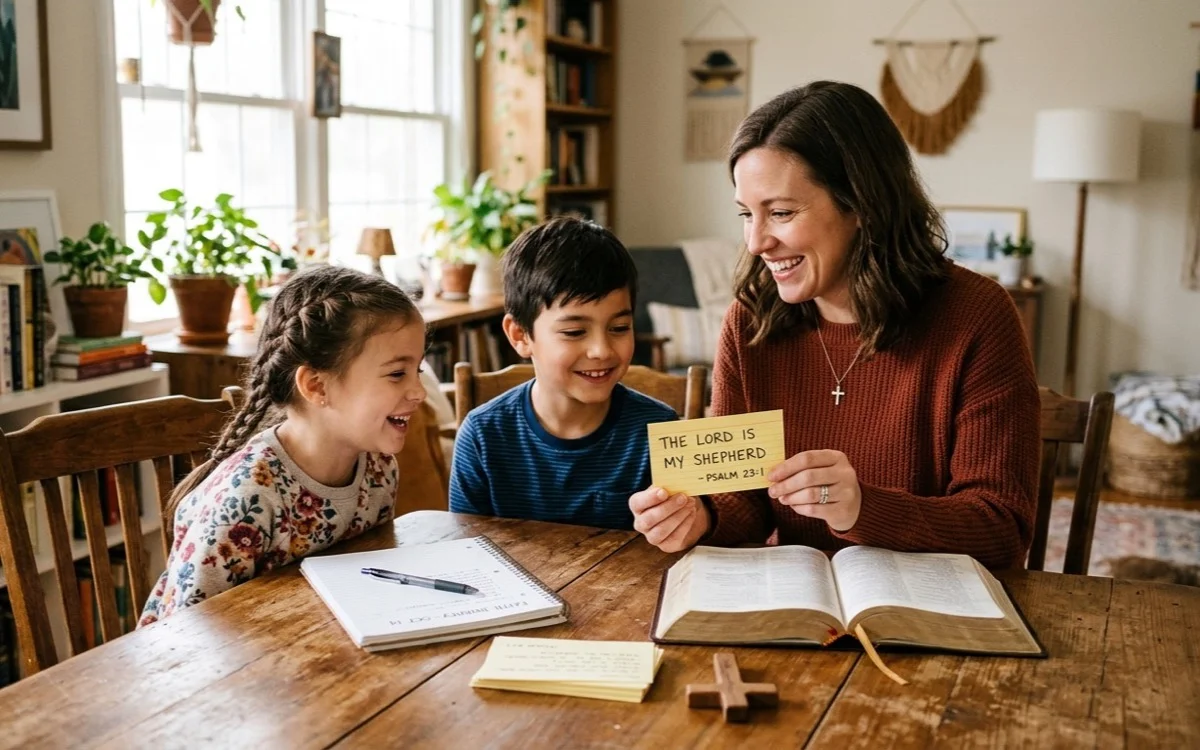
Memorizing Junior Bible Quiz questions can feel daunting at first, but with the right approach, it becomes one of the most rewarding journeys a child and family can take together.
Junior Bible Quiz (JBQ) is designed to help children hide God's Word in their hearts. Across questions of varying point values, quizzers learn foundational Bible doctrines, key historical events, and life-changing Scripture verses.
For parents and coaches, the central question is often simple: What is an effective, encouraging way to help children learn and retain these questions?
Whether you are working with a kindergartener who cannot yet read or an experienced quizzer preparing for a competition, these eight practical parenting techniques can help make memorization smoother, more enjoyable, and effective.
1. Start with Listening and Repeating
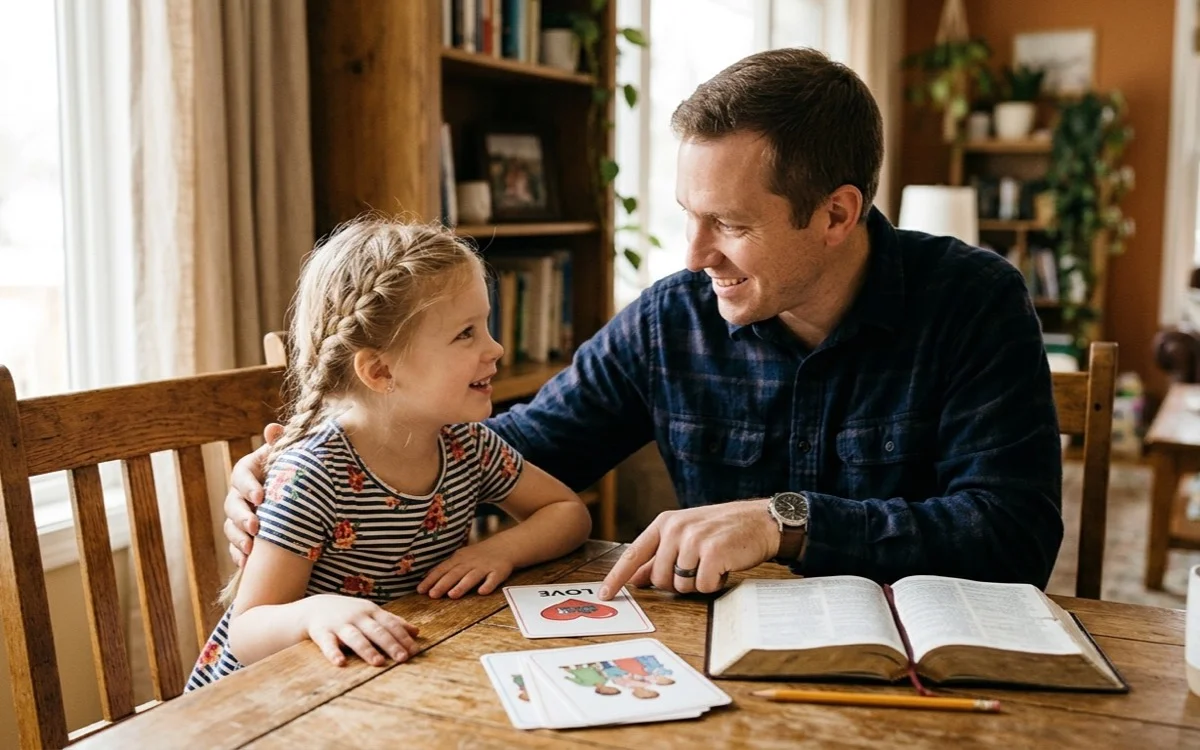
Many parents assume that children must know how to read fluently before starting Junior Bible Quiz. In reality, young children—including kindergarteners and preschoolers—can begin learning JBQ questions through listening and repetition.
Before children read words on a page, they learn language by listening to their parents speak and repeating what they hear. You can apply the exact same natural rhythm to Bible Quiz practice.
A simple call-and-response approach works well:
- Read the question aloud clearly: State the question with natural inflection.
- Read the answer in small phrases: For longer answers, break the sentence into two or three short parts.
- Have the child repeat each phrase: Let them repeat your words after each part.
- Put the full sentence together: Once the phrases are familiar, recite the entire question and answer together.
In our own experience, this listening-and-repeating approach helped young children learn question answers even before they could read independently. During some practice sessions, children were able to learn the answers to around 20 questions in just 5 to 10 minutes through guided call-and-response. While this was an individual experience rather than a typical rate or a guarantee of long-term retention, it shows how quickly young children can absorb information when they are freed from the frustration of struggling through written text. Turning those early gains into lasting recall still requires regular, patient review.
2. Use Audio Learning for Independent Practice
While parent-led practice is essential, parents are not always available to read questions aloud throughout the day. Audio learning gives children a way to practice independently.
For children who are still learning to read, hearing questions and answers recited aloud makes the material accessible without requiring constant one-on-one assistance.
The JBQ Companion app includes a read-aloud feature that lets quizzers listen to questions and answers at their own pace. This makes it easy to:
- Practice independently during quiet time or while relaxing.
- Review questions in the car or on the way to church.
- Hear correct pronunciation and phrasing repeated consistently.
- Listen to challenging questions multiple times until the wording feels familiar.
Combining parent-led practice with audio listening gives children an easy, flexible way to reinforce what they are learning.

3. Help Immediately When Children Get Stuck
One common mistake during practice is turning every question into a test. Leaving a child in prolonged silence or repeatedly prompting them with "Think harder, you know this!" often produces anxiety and embarrassment rather than better recall.
A more encouraging approach is to step in with immediate assistance as soon as the child hesitates:
- Ask the question: Present the question clearly and give the child an opportunity to begin the answer.
- Supply the missing part immediately: If the child hesitates or gets stuck, prompt them right away with the missing word or phrase. Do not let them struggle or feel put on the spot.
- Help them complete the answer: Guide the child through the rest of the sentence together.
- Repeat the process 4 to 5 times: Ask the question again, guiding them through the answer several times so the sequence becomes familiar.
- Gradually reduce assistance: On each repetition, provide less help—perhaps giving only the first sound or a single key word.
- Encourage an independent attempt: Finally, ask the question one more time and let the child answer entirely on their own.
For example, take official JBQ Question 3: "What are the two divisions of the Bible?" with the answer, "Old Testament and New Testament." If you ask the question and the child begins by answering "Old Testament" but gets stuck on the rest, immediately supply "and New Testament." Have the child repeat the complete answer—"Old Testament and New Testament." Repeat the exchange four to five times while gradually reducing your assistance, and then ask the question once more so the child answers the complete response independently.
This supportive approach keeps practice positive and prevents children from feeling discouraged when they do not remember an answer right away.
4. Repeat the Complete Answer Five Times
Answering a question correctly once does not mean it is firmly memorized. A newly learned answer can easily be forgotten by the next day if it is not reinforced.
A practical habit is to have the child repeat the complete answer approximately five times after working through it.
Five repetitions is not a magic or scientifically guaranteed number, but rather a practical routine that many families find helpful. Parents can easily adjust this number based on the child's age, attention span, and the difficulty of the question.
When practicing repetitions, keep a few helpful principles in mind:
- Repeat the full answer: Always have the child repeat the complete answer rather than just a single isolated word. This helps them connect the entire thought together.
- Keep it light and engaging: Count the repetitions on your fingers, trade high-fives after each round, or vary your speaking tone to keep the energy upbeat.
- Adapt to the child: If three repetitions are enough for an easy question, move on. If a longer quotation question needs an extra pass, take your time.
The goal is simply to give the child enough immediate practice to feel confident before moving to the next question.
5. Review Questions Every Single Day
Short, daily practice sessions are much more effective than long, exhausting cram sessions right before a quiz meet. Ten to fifteen minutes of focused review each day helps keep questions fresh without overwhelming a child.
A balanced daily session combines familiar review with new learning:
- Start with familiar questions: Begin each practice with a few questions the child already knows well. Starting with success builds immediate confidence.
- Introduce new questions gradually: Families can decide how many new questions to introduce each day based on the child's age, the length of the questions, and how much time they have to prepare. Some days might focus on one or two challenging questions, while other sessions can cover more.
- Review previously learned questions: Spend time reviewing questions learned earlier in the week to ensure they stay sharp.
Spreading practice across the week makes the preparation manageable and helps children retain what they have worked so hard to learn.
6. Track Each Question's Learning Progress
As a quizzer learns more questions, it becomes difficult to remember offhand which questions are solid and which still need work. Without a way to organize them, practice time is often spent re-asking questions the child already knows while harder ones are overlooked.
The JBQ Companion app helps parents and quizzers organize questions using four clear learning statuses:
- Not Started: Questions the child has not yet begun learning.
- Learning: Questions currently being introduced and practiced with assistance.
- Almost Mastered: Questions the child usually answers correctly, but where an occasional prompt or reminder is still needed.
- Mastered: Questions the child can recite accurately and confidently without assistance.
Tracking these levels gives parents a clear picture of where to focus. When a child hesitates or misses a question during review, moving that question back to an earlier status helps ensure it receives extra attention during upcoming sessions.
Focusing daily practice on questions in the "Learning" and "Almost Mastered" categories makes study time much more productive.
7. Make Practice Encouraging and Enjoyable
Junior Bible Quiz is a ministry before it is a competition. If practice sessions become tense or critical, children will naturally withdraw or view study with dread.
Creating an uplifting, joy-filled environment is one of the greatest gifts a parent or coach can give:
- Celebrate small milestones: Celebrate when a child masters their first set of questions, tackles a higher-point question, or recites a Scripture quotation smoothly.
- Never compare children: Avoid comparing siblings or teammates. Every child possesses a unique learning pace, attention span, and developmental readiness.
- Adjust the pace to the child: If a child is tired or struggling on a particular day, shorten the session or focus on questions they already enjoy. Long-term consistency matters far more than pushing through fatigue.
- Incorporate games and variety: Recite answers while tossing a ball, taking a walk, or trading roles so the child gets to quiz the parent. Variety keeps practice engaging.
8. Build Confidence Through Consistent, Patient Practice
As children practice consistently, they move from guided repetition to true independent recall. Recognizing when a question is genuinely mastered helps parents know when a child is ready to move forward with confidence.
A child has usually mastered a question when they can:
- Answer without prompting: They begin and finish the entire answer smoothly on their own, without needing a starting hint or word prompt.
- Recall the answer across different days: They can answer the question just as easily several days later as they did on the day they learned it.
- Answer when questions are asked out of order: Instead of relying on the sequence of a list, they recognize the question when it is mixed into a random practice session.
- Maintain accuracy through ongoing review: Even after a question is mastered, occasional review ensures it remains sharp over the course of the quiz season.
Watching children answer questions independently builds real confidence. More importantly, the Scripture they are learning is not just information for a Saturday match—it is God's Word taking root in their hearts to encourage and guide them for years to come.
About JBQ Companion
Organizing Junior Bible Quiz practices, tracking quizzer progress, and coordinating team preparation can involve significant effort.
JBQ Companion is a mobile application designed to support Junior Bible Quiz preparation and team coordination.
Learn more at https://www.jbqcompanion.com/.
This article offers practical study guidance drawn from Junior Bible Quiz parenting and coaching experience. Individual churches and families may adapt these techniques to fit their children's needs, and all match decisions should follow official competition guidelines.