
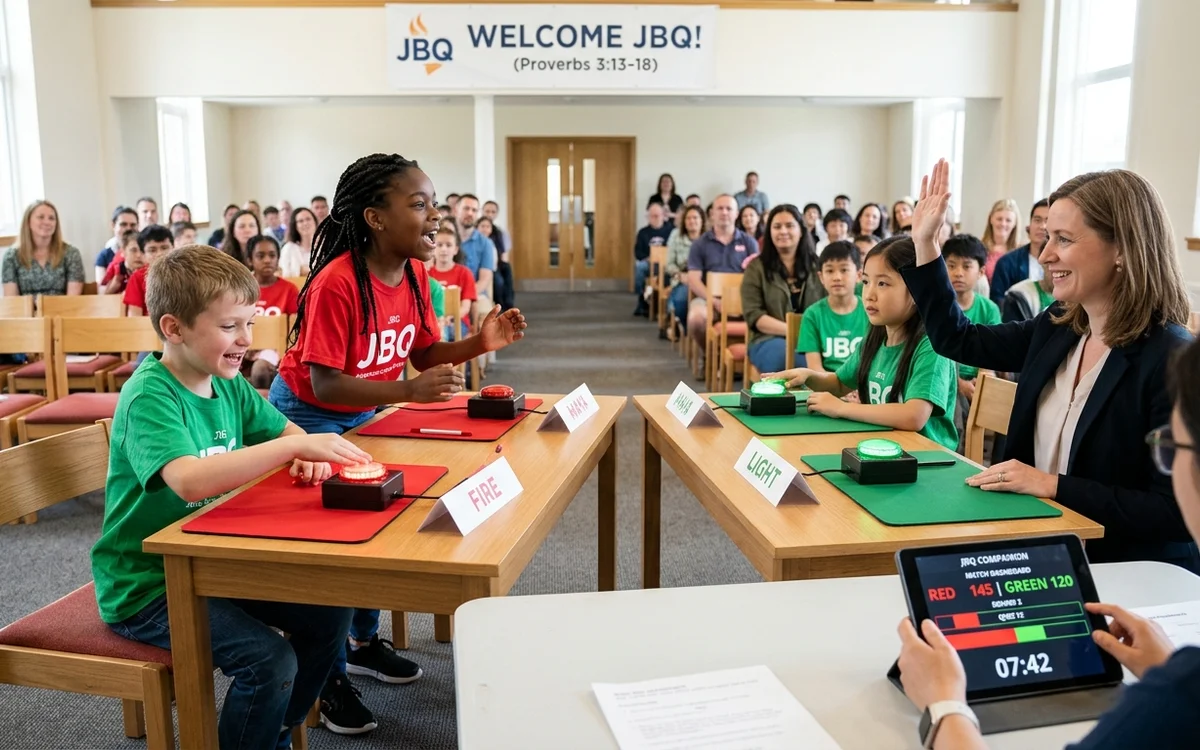
During a Junior Bible Quiz (JBQ) competition, not every answer is easy to judge.
Sometimes a quizzer provides the correct information using different words. Another child may repeat a word while quoting Scripture. A quizzer might give an incorrect number and then immediately try to correct it.
Occasionally, the quizmaster or judges may disagree about whether an answer meets the official requirements.
These situations can be especially difficult during a close match, when a single ruling may affect the final result.
Fortunately, Junior Bible Quiz provides procedures for reviewing disputed answers and correcting match errors.
Understanding these procedures helps coaches present concerns respectfully and helps officials make consistent decisions.
This guide explains the most important rules for judging answers, Coach's Appeals, and Points of Order, based on the Assemblies of God Junior Bible Quiz Official Quiz Guidelines, updated July 2024.
Official rule source: All official rule explanations are based on the Assemblies of God Junior Bible Quiz Official Quiz Guidelines, updated July 2024.
1. Understanding the Role of the Quizmaster and Judges
During a JBQ match, the quizmaster reads the official questions, manages the flow of the competition, and participates in judging responses.
The judges help determine whether a response meets the requirements of the official Bible Fact-Pak and the JBQ guidelines.
These decisions require careful listening. A quizzer may speak quickly, pause in the middle of an answer, or pronounce a word differently.
Officials must determine what the quizzer actually said and whether it satisfies the applicable rule.
A ruling should not depend on which team is winning, which child is answering, or whether the officials personally know the quizzer.
Good judging requires careful listening, knowledge of the guidelines, and consistent treatment of both teams.
Coaches also have a responsibility to understand these procedures so disagreements can be addressed through the correct process (see our advice on handling parent conflicts and match rulings respectfully).
2. How Are Non-Quotation Answers Judged?
Not every JBQ answer must be recited word for word.
For ordinary non-quotation questions, the official guidelines generally allow an answer that communicates the required information in essence.
This means a quizzer may use different wording while still providing the correct information.
However, the answer must contain all the essential information required by the official Bible Fact-Pak.
Understanding Essential Information
Suppose the official answer contains several required ideas. A quizzer cannot automatically receive credit by providing only one of them.
Officials must determine whether the complete response contains the required information.
The official guidelines also explain how to evaluate answers containing the words “and” or “or”:
- When the Bible Fact-Pak presents alternatives joined by “or,” providing one acceptable alternative may be sufficient.
- When required information is connected by “and,” the quizzer generally must provide all the connected information in essence.
What About Mispronounced Words?
Recognizable mispronunciation does not automatically make an answer incorrect.
This is especially relevant for younger children who may struggle to pronounce biblical names or unfamiliar words (see our guide on teaching JBQ to young children).
The officials must evaluate whether the required information is recognizable.
The goal is to judge the information actually communicated, not penalize every harmless difference in pronunciation.
3. How Are Quotation Questions Judged?
Quotation questions follow stricter requirements.
The Scripture quotation itself must be perfect according to the official Bible Fact-Pak wording.
A quizzer may be ruled incorrect if a word, syllable, or letter is omitted, repeated, added, or changed in the quotation.
This is different from ordinary non-quotation answers, where equivalent wording may be acceptable.
Example: Repeating a Word
Consider this illustrative phrase, not an official JBQ answer:
“The Lord is my shepherd.”
Suppose a child says:
“The Lord is my, my shepherd.”
Even though the meaning is clear, the quotation contains a repeated word. In a quotation question, that repetition can make the response incorrect.
This is why coaches should teach quizzers to practice the exact wording of their assigned Scripture quotations (explore memorization techniques in our guide to memorizing JBQ questions effectively).
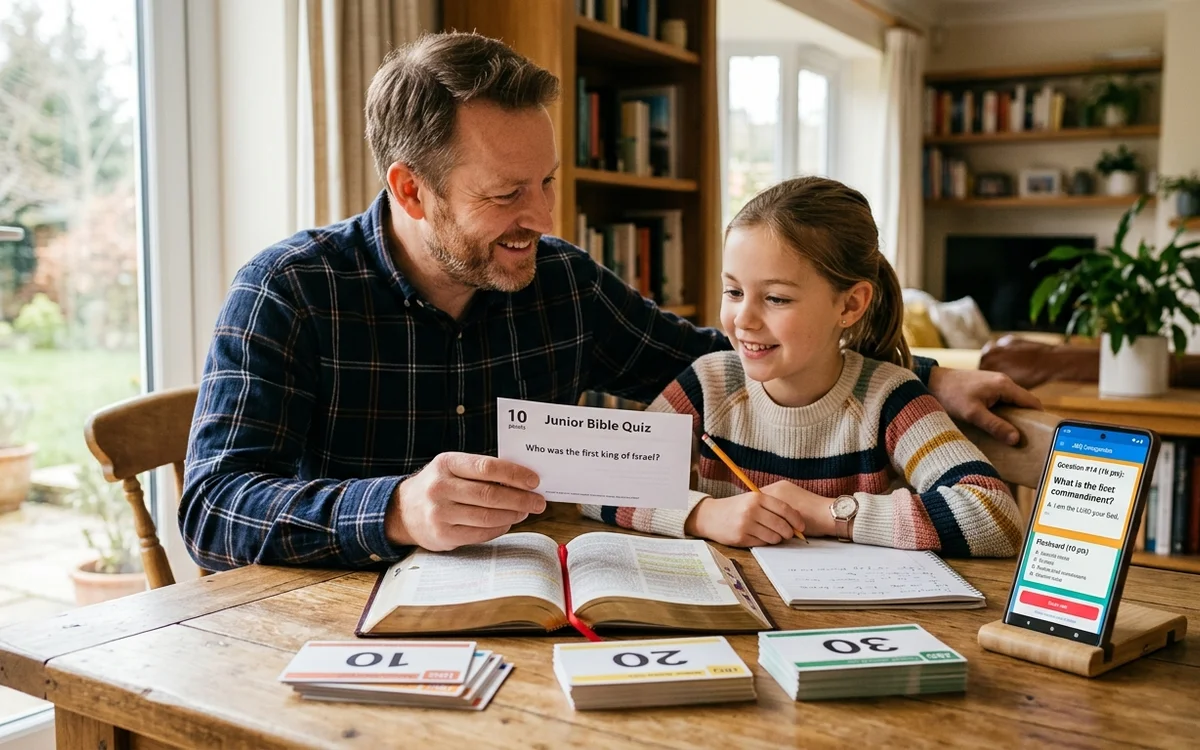
What About Pausing Midword?
A child may pause while speaking a word and then continue.
Officials need to listen carefully to determine whether the child actually repeated, added, omitted, or changed part of the required quotation.
A natural hesitation is not automatically equivalent to repeating an entire word.
The key question is whether the spoken quotation remains perfect under the official guidelines.
What About Pronunciation?
A recognizable mispronunciation, accent, lisp, or stutter is not by itself an imperfect quotation.
Coaches should distinguish pronunciation difficulties from actual changes to the required wording.
Quotation accuracy is about the words that were spoken—not simply whether the child sounded fluent.
4. Where Should the Bible Reference Be Given?
Quotation questions require the complete Scripture reference, including book, chapter, and verse.
Under the official guidelines, the reference may be given either before or after the verse.
The guidelines also allow portions of the reference to be repeated.
For example, a quizzer may begin with the full reference, recite the quotation, and then repeat the reference.
This is different from repeating words inside the actual Scripture quotation.
The reference must be complete and accurate, while the quotation itself must be perfect.
What About Interrupted Quotation Questions?
When a quotation question is interrupted, the quizzer must complete the question in essence before giving the perfect quotation and its reference (see our guide on JBQ interruptions, rereads, and wrong quizzer responses).
The completed question portion does not require the same word-for-word standard as the Scripture quotation itself.
Practicing these parts separately can help children understand exactly what must be perfect and what may be given in essence.
5. Can a Quizzer Give a Wrong Answer and Then Correct It?
This is one of the most important areas of confusion in JBQ judging.
Imagine a question asks for the number of books in the New Testament. The correct answer is 27.
A quizzer responds:
“Thirty-nine ... twenty-seven.”
Because the quizzer supplied incorrect information before completing the correct response, the initial wrong information cannot simply be erased by changing the answer.
Under the official answering guidelines, incorrect information given before the required response is completed causes the answer to be ruled incorrect.
What If the Correct Answer Comes First?
The official guidelines distinguish a different situation.
If a quizzer first gives the complete required correct response and only afterward adds incorrect information, the correct response may still count.
For example, if the quizzer clearly and completely answers “Twenty-seven” and only then adds an unrelated incorrect statement, the ruling is not necessarily the same as saying “Thirty-nine” first.
The sequence matters:
This distinction should be taught carefully. A quizzer should aim to give one clear, complete, accurate response rather than guessing several possible answers (see our buzzer speed techniques in how to improve buzzer speed and accuracy in JBQ).
6. What If the Judges Disagree About an Answer?
Some responses are straightforward to judge.
For a quotation question, officials may identify a missing or repeated word by comparing the spoken response with the official text.
Other situations require more judgment.
For example, a non-quotation answer may use different words that one judge considers sufficient while another judge believes an essential idea is missing.
This is why officials should know the applicable Bible Fact-Pak wording and guidelines.
During an ordinary ruling, they must apply the appropriate judging procedure.
If a coach formally challenges the correctness of that ruling, the official Coach's Appeal process provides a structured method for reviewing it.
An appeal should focus on the exact response and the applicable guidelines—not on the reputation of the quizzer or the importance of the match.
7. What Is a Coach's Appeal?
A Coach's Appeal is the official procedure for challenging a decision about the correctness of a quizzer's response.
A team is allowed two Coach's Appeals per match.
An appeal is not intended for general coaching discussions, equipment issues, or disagreements about every match procedure.
It is specifically used to seek a change in the ruling on whether a response was correct or incorrect.
Who Can Initiate an Appeal?
The head coach or an assistant coach may initiate a Coach's Appeal.
However, only the head coach may present the appeal to the officials.
The appeal must be presented respectfully and supported by the Bible Fact-Pak and the official guidelines.
When Must an Appeal Be Requested?
A Coach's Appeal must normally be requested before the quizmaster:
- Calls the next question.
- Grants a timeout.
- Officially closes the match.
The guidelines provide a specific exception related to a missed reread that is later corrected.
Because the opportunity to appeal can close quickly, coaches should pay attention between questions. Do not wait several questions before challenging a response ruling.
8. How Much Time Is Allowed for a Coach's Appeal?
Once the quizmaster grants the appeal, the requesting team receives 30 seconds to prepare and present it.
This is the complete preparation-and-presentation period, not an additional minute of preparation followed by unlimited speaking time.
During preparation, the head coach may communicate verbally with one member of the team.
Only the head coach presents the appeal.
The remaining members of both teams must follow the applicable communication restrictions (see our guide on JBQ team fouls, timeouts, and substitutions).
How Should a Coach Present an Appeal?
A practical presentation should include:
- The response or ruling being challenged.
- The specific information the quizzer gave.
- The applicable Bible Fact-Pak wording or guideline.
- A concise explanation of why the ruling should change.
For example, a coach might explain that a non-quotation response included the required information in essence, even though it used different wording.
The coach should avoid personal criticism or unnecessary remarks about the opposing team.
When the presentation is finished, the head coach should indicate that it has concluded. If time is called, the presentation must stop.
9. How Do the Quizmaster and Judges Vote on an Appeal?
The official appeal process is designed to make the decision as independent and fair as possible.
The quizmaster and judges use coins to indicate their votes:
- Heads: Accept the appeal.
- Tails: Deny the appeal.
Each official first votes independently, based on the response heard and the applicable guidelines. The coins are revealed simultaneously.
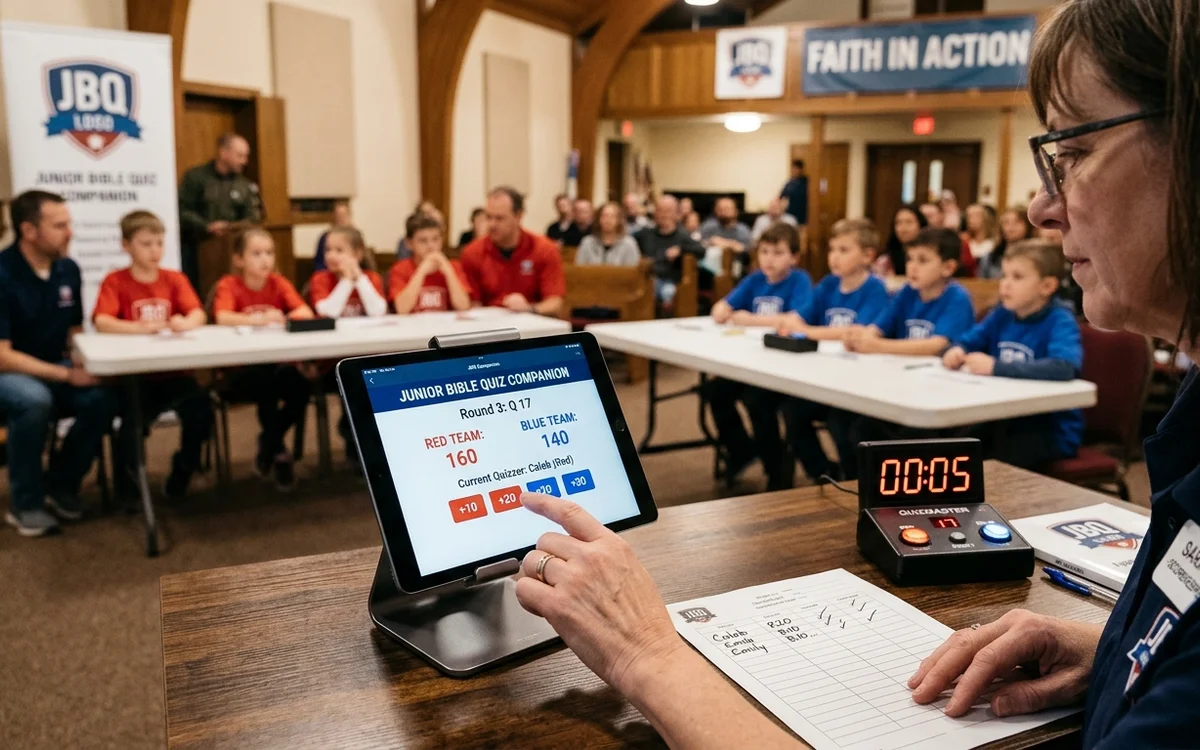
What If Everyone Agrees?
If the first vote is unanimous, the quizmaster announces the decision.
If the appeal is accepted, the appropriate scoring or question correction is made (see JBQ scoring rules).
What If the Officials Disagree?
If the first vote is not unanimous, the quizmaster and judges briefly discuss the appeal.
They should not allow the teams or audience to hear their discussion.
Afterward, they vote again. The second vote does not have to be unanimous; the majority decision determines the ruling.
The vote is not unanimous. The officials discuss the response and the relevant guidelines, then vote again. If the second vote is two heads and one tail, the appeal is accepted by majority.
This process helps prevent a disputed ruling from depending solely on one person's interpretation.
10. What Is a Point of Order?
A Point of Order is different from a Coach's Appeal.
It is used to identify a procedural error or guideline violation that has not already been addressed.
Examples include:
- Quiz equipment needs to be reset.
- The quizmaster advances to the next question without giving a required reread.
- A quizzer remains at the table after becoming ineligible (see our guide on handling late-discovered quiz-outs and strike-outs).
- The quizmaster misreads a question or point value.
- A question is ruled incorrect prematurely, before the allowed response time expires and without incorrect information having been given.
- The prescribed distribution of question values is exceeded.
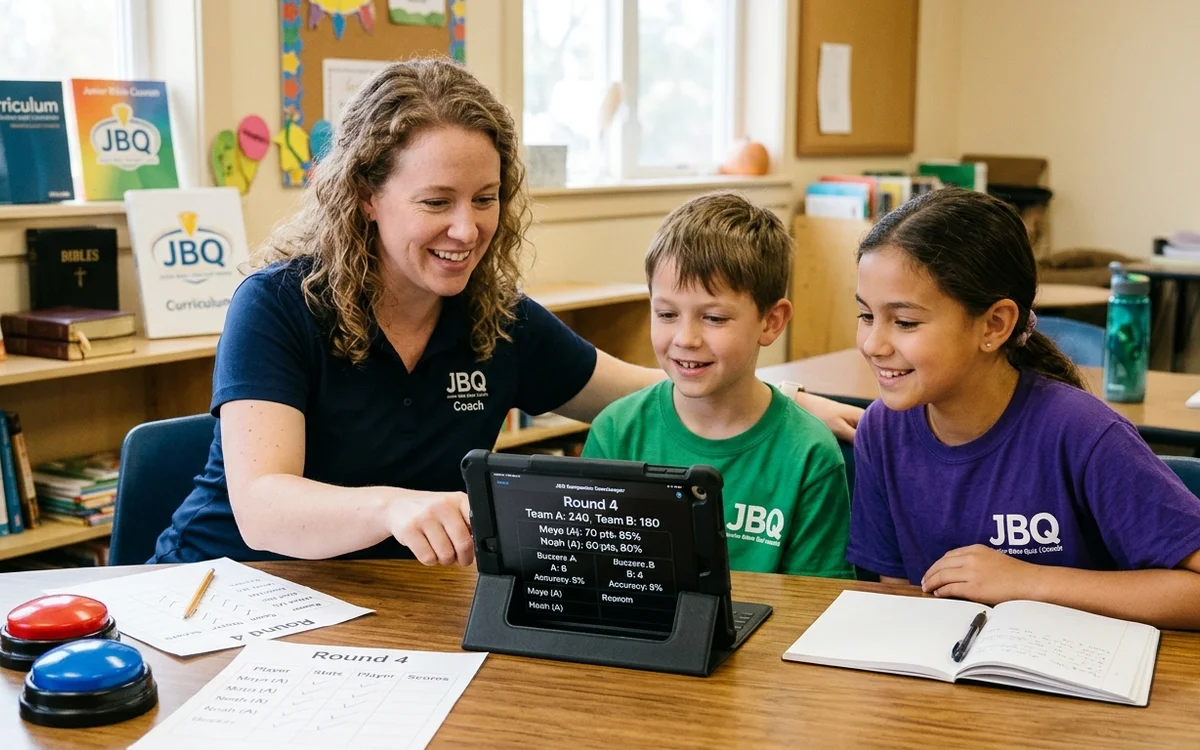
Who Can Call a Point of Order?
The head coach and assistant coaches may raise a Point of Order for the situations permitted in the official guidelines.
An active quizzer has a more limited right.
Under the July 2024 rules, a quizzer may call a Point of Order for the first two listed situations: resetting equipment and a missed reread when the quizmaster has moved to the next question.
The person raising the Point of Order should state it, wait to be recognized by the quizmaster, and briefly explain the procedural problem.
The quizmaster then determines the proper correction, consulting or requesting a vote from the judges when appropriate.
Important Warning: A Point of Order must not be used to challenge whether a quizzer's answer was correct or incorrect. That is the purpose of a Coach's Appeal. Using a Point of Order to request reversal of a response ruling is itself a team foul.
11. Point of Order Versus Coach's Appeal
The most important distinction is simple:
- Coach's Appeal: Was the response judged correctly?
- Point of Order: Was the match procedure followed correctly?
Using the right procedure helps officials correct problems without creating unnecessary penalties.
12. What Happens If the Quizmaster Makes a Reading Error?
Even experienced quizmasters may occasionally make a mistake.
They might announce the wrong point value, skip a question, misread part of the official question, or forget a reread.
Coaches should learn the correct procedures for raising these issues.
For example, if the quizmaster announces an additional 30-point question beyond the permitted distribution, the coach may raise a timely Point of Order.
If the quizmaster accidentally skips a required reread after an incorrect interruption, the rules provide a limited opportunity to correct the omission.
The correction depends on the type of mistake and when it is discovered. Not every error should be handled by simply asking the same question again.
In some circumstances, officials must void the question and use a substitute question. In others, the original question is reread. The specific official guideline determines which action is appropriate.
13. What If an Appeal Changes a Ruling on an Interrupted Question?
This is an important situation because an appeal may change which team is entitled to answer next.
Suppose Green Two interrupts a 20-point question. The quizmaster initially rules Green Two's answer correct.
Red Team then makes a successful Coach's Appeal, and the answer is changed to incorrect.
Under the official guidelines, the quizmaster must allow any further permitted appeals on that question.
If the original interrupted response remains incorrect after all appeals, a substitute question is read to the opposing team.
This differs from the normal procedure where an incorrect interruption is initially ruled incorrect and the original question is reread.
The distinction matters because the appeal occurs after the original response was initially accepted.
Coaches and quizmasters should understand that a reversed ruling may require additional corrective action rather than merely changing points on the score sheet.
14. Can Coaches Appeal More Than Once on the Same Question?
The appeal sequence can become more complicated when both teams have responded to the same question and both responses were ruled incorrect.
The official guidelines specify which team has the first opportunity to appeal and under what circumstances another appeal may follow.
In general, the team that responded first gets the first opportunity to appeal. The opposing team then receives its opportunity according to the specified sequence.
The rulebook also provides limited circumstances in which the first team may challenge a ruling concerning the opposing team's response.
Because these situations depend on the exact order of events, coaches should consult the official procedure rather than assuming that every team always receives another appeal.
Each team has a total allotment of two Coach's Appeals during the match.
A substitute question is treated as a new question for appeal purposes.
15. How Can Coaches Prepare for Appeals Before a Match?
Coaches should not wait until a championship or other important match to learn how appeals work.
A few simple preparation steps can prevent confusion:
- Study the Answering Guidelines: Understand the difference between non-quotation answers given in essence and perfect Scripture quotations. Pay particular attention to missing required information, wrong information given before a complete answer, repeated quotation words, incomplete references, and recognizable mispronunciations.
- Keep the Official Guidelines Accessible: Coaches and inactive quizzers are permitted to use the Bible Fact-Pak and official guidelines in authorized formats. Being familiar with the relevant sections can help a coach present a concise appeal within the time limit.
- Practice Short Appeals: During church practice, coaches can occasionally simulate a disputed answer. One person acts as quizmaster, others act as judges, and a coach practices presenting a 30-second appeal. This can help new coaches learn to identify the relevant rule quickly.
- Teach Sportsmanship: An appeal is not an accusation against the officials. It is a formal part of the competition. Coaches should model respect regardless of whether the appeal succeeds (read our coaching guidelines in common JBQ coaching mistakes).
16. Common Mistakes Coaches and Officials Should Avoid
- Mistake 1: Using a Point of Order to challenge an answer: A response ruling must be challenged through a Coach's Appeal.
- Mistake 2: Assuming non-quotation answers must be word for word: They generally require the essential information in essence.
- Mistake 3: Allowing changed or repeated wording in a perfect quotation: The quotation portion has stricter requirements.
- Mistake 4: Accepting an incorrect answer simply because the quizzer later corrected it: The sequence of information matters.
- Mistake 5: Waiting until the next question to request an ordinary appeal: The right to appeal is time-limited.
- Mistake 6: Allowing the appeal presentation to continue after time is called: The official 30-second period must be respected.
- Mistake 7: Discussing an appeal before the initial independent vote: Officials must follow the required voting procedure.
- Mistake 8: Treating the first non-unanimous vote as the final decision: The guidelines require discussion and a second vote.
- Mistake 9: Letting frustration influence a ruling: Officials should focus on the response and the guidelines.
- Mistake 10: Treating appeals as an opportunity to criticize the opposing team: Appeals must remain relevant and sportsmanlike.
A Quick Reference for JBQ Coaches and Officials
This table summarizes selected guidelines. Special rulings, appeals involving both teams, and unusual match situations may require additional provisions from the full rulebook.
Frequently Asked Questions
Must every JBQ answer be word for word?
No. Non-quotation answers generally must provide the required information in essence. The Scripture portion of a quotation question must be perfect.
Can a quizzer repeat the Scripture reference?
Yes. The guidelines permit repetition of portions of the reference.
Can a quizzer repeat a word inside the Scripture quotation?
A repeated word can make the required perfect quotation incorrect.
Can a coach appeal if the quizzer said the wrong number and then corrected it?
The coach may use the official appeal process to challenge the ruling, but incorrect information given before completing the required answer is a reason to rule the response incorrect.
How many Coach's Appeals does each team receive?
Two per match.
How much time does a coach have to present an appeal?
Thirty seconds after the appeal is granted, including preparation and presentation.
Can a quizzer call a Point of Order?
Yes, but only for the limited situations specified in the official guidelines.
Can officials discuss an appeal before voting?
They may briefly consult the guidelines, but the initial votes must be independent. Discussion among officials is ordinarily reserved for a non-unanimous first vote, subject to the stated clarification exception.
Can a district coordinator automatically overturn a judge's decision?
No. Ordinary response rulings must follow the authorized appeal process. The rulebook includes a separate procedure for unusual situations not clearly covered by the guidelines, involving consultation with the coordinator.
Final Thoughts
Junior Bible Quiz competitions are more enjoyable when parents, coaches, quizzers, and officials understand how responses are judged and how disputes are resolved.
Quotation questions require special precision, while ordinary non-quotation answers may be evaluated by their essential meaning.
Coach's Appeals provide a structured method for challenging response rulings.
Points of Order help correct procedural mistakes.
The official voting procedure gives judges an opportunity to evaluate disputed answers independently and, when necessary, discuss their reasoning before reaching a final decision.
These rules help protect fairness for both teams.
The goal of a Coach's Appeal is not to win an argument. It is to reach the correct ruling while demonstrating the respect, integrity, and Christian character that Junior Bible Quiz seeks to develop.
About JBQ Companion
JBQ Companion provides mobile tools for Junior Bible Quiz question learning, home practice, buzzer training, and match scorekeeping.
The Learn module can help quizzers become familiar with the official wording of questions, while the Scorekeeper module supports recording scores and match performance.
During coaching and official preparation, these tools can complement careful study of the Bible Fact-Pak and the official JBQ guidelines.
Learn more at www.jbqcompanion.com.
Official Reference
Assemblies of God — Junior Bible Quiz Official Quiz Guidelines (Updated July 2024)
https://jbq.ag.org/-/media/JBQ/Downloads/HelpfulFiles/2024-Guidelines.pdf
Relevant sections include Answering Guidelines (pages 13–14), Point of Order (pages 14–15), Coach's Appeals (pages 15–16), and Voiding Questions (page 17).
This article is an educational explanation of selected official JBQ procedures. It does not replace the rulebook. Officials and coaches should consult the complete guidelines for the exact circumstances of each disputed ruling.