Helping a young child learn Junior Bible Quiz (JBQ) questions can seem challenging, especially when the child is still in kindergarten or has not yet learned to read independently. However, reading ability does not have to determine when a child begins learning God's Word.
Young children learn many things by listening, repeating, observing, and practicing. The same techniques can help them learn JBQ questions and answers with joy and excitement.
For parents and coaches, the goal is not to make children memorize hundreds of questions immediately. It is to introduce Bible knowledge gradually, make learning enjoyable, and help children develop the confidence to participate.
Here are ten practical strategies for teaching Junior Bible Quiz to young children who cannot read yet.
1. Start with Listening and Repeating
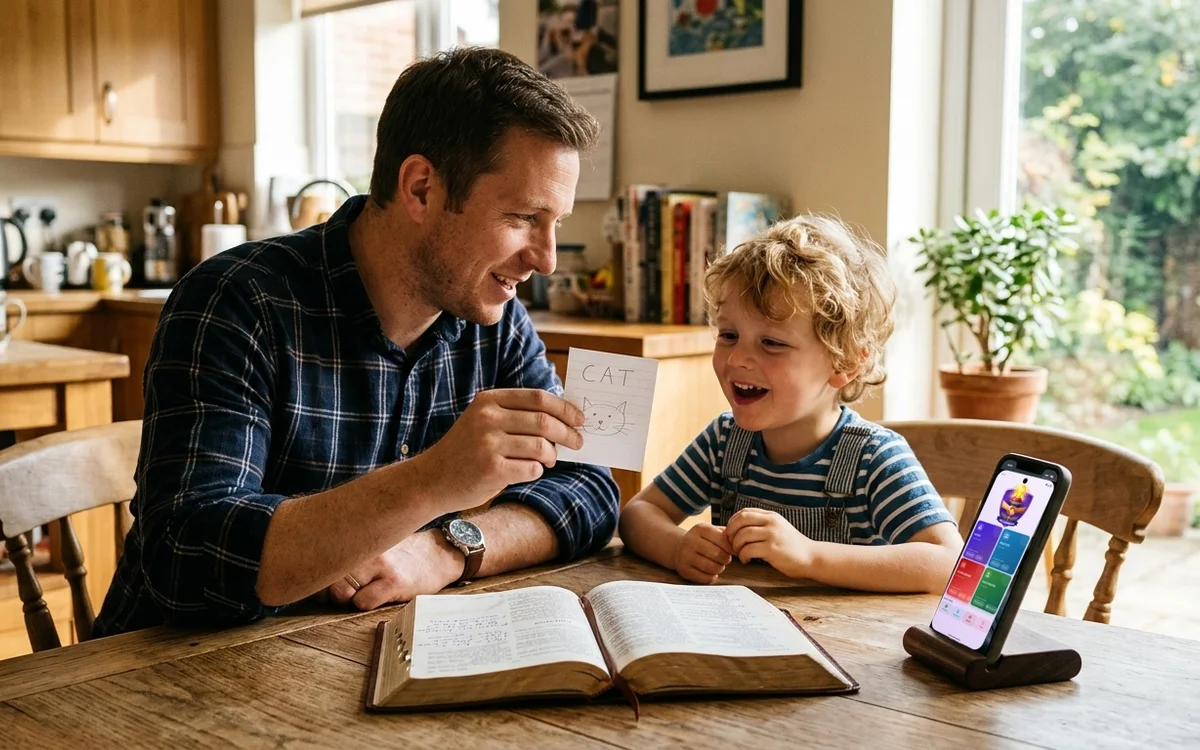
Young children naturally learn through listening and imitation. Long before they can read a sentence, they can recognize familiar words and repeat what they hear.
Parents can use this ability to introduce JBQ questions through a natural call-and-response rhythm.
For example, consider this official 10-point question:
Question: How many books are there in the Bible?
Answer: 66.
A parent can read the question and say the answer. Then ask the child to repeat it. Repeat the exchange a few times before allowing the child to answer independently.
For longer answers, introduce the words slowly and divide the response into smaller phrases.
Practical tip: Begin with a small number of questions. Five questions in a short practice session may be enough for some beginners, while other children may need a slower pace. The objective is steady learning, not completing the largest number of questions.
2. Try the Echo Method for Longer Answers
Another effective approach is to have children repeat the answer immediately after the parent speaks. This is particularly useful when a child cannot read or remember a long answer independently.
For example, consider this official JBQ question:
Question: What is the Bible?
Answer: The Bible is the inspired Word of God and is His revelation to all people of Himself and His plan of salvation.
Instead of expecting a young child to memorize the entire answer immediately, divide it into phrases:
- The parent says, "The Bible is the inspired Word of God."
- The child repeats the phrase.
- The parent then continues with the next portion of the answer, and the child repeats it.
- Once the child becomes familiar with the phrases, gradually combine them into the complete answer.
An Alternative: Have the Child Follow Your Voice
Some children learn well when they speak along with a parent rather than waiting until the parent finishes. The parent begins reciting the answer, and the child follows closely, repeating the words almost simultaneously.
After several attempts, the parent can gradually lower their voice or stop speaking midway, allowing the child to continue. This method provides reassurance while helping children build independent recall.
3. Repeat Newly Learned Answers Five Times
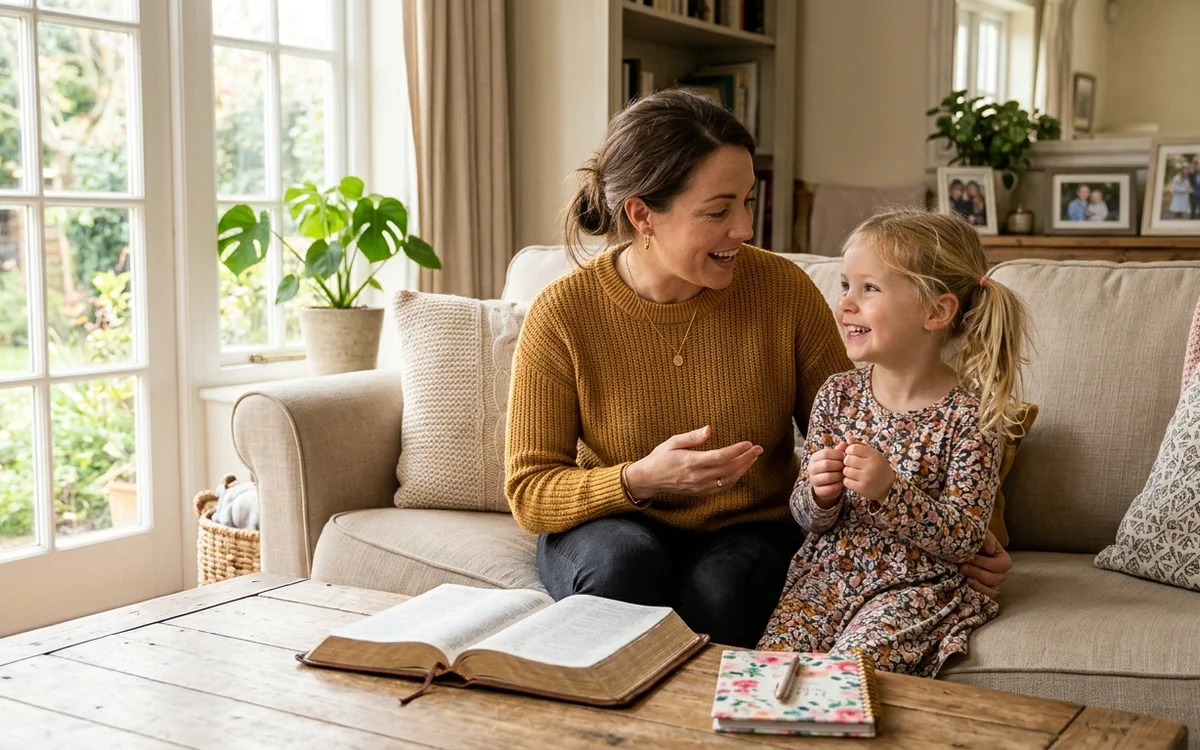
When children answer a question correctly for the first time, they may remember it during that session but struggle to recall it later.
One practical technique is to ask the child to repeat the complete answer five times after learning it:
- Teach the question and answer with assistance.
- Ask the child to repeat the answer independently.
- Once the child can answer correctly, encourage approximately five complete repetitions.
- Revisit the question later or during the next practice session.
This technique can help children become more comfortable saying the answer without hesitation. Five repetitions is a practical routine rather than a guaranteed method of memorization. Some children may need fewer repetitions, while others may need more.
The important thing is to make repetition encouraging rather than exhausting.
4. Use Simple Memory Clues for Similar Questions
Young children sometimes confuse questions that have similar wording or closely related answers. Instead of repeatedly correcting the child, try introducing a simple memory clue.
Consider these two official 10-point questions:
A young child might remember that the Old Testament has the larger number and the New Testament has the smaller number. A parent could explain:
"Think of the Old Testament as having more books because it has the bigger number, 39. The New Testament has 27."
The clue does not need to be complicated or represent a formal explanation of Bible history. Its purpose is to help the child associate the correct answer with the correct question. Parents can develop similar memory clues using familiar objects, simple comparisons, or short stories. As children improve, gradually remove the clues and ask the questions normally.
5. Use the JBQ Companion Learn Module for Audio Practice
One challenge for parents is finding enough time to read questions repeatedly throughout the day. The JBQ Companion app provides a helpful alternative through its Learn module and audio playback features.
Parents can select the relevant questions for their child's current level and quiz meet, then use the Play feature to listen to the selected questions and answers. For example, if a young quizzer is currently learning only 10-point questions for an upcoming meet, parents can focus audio practice on that set.
The audio player can read questions sequentially, and repeat playback allows children to hear the material multiple times. This makes JBQ practice easier to incorporate into the family's existing routine.
Learning Without Constantly Looking at a Screen
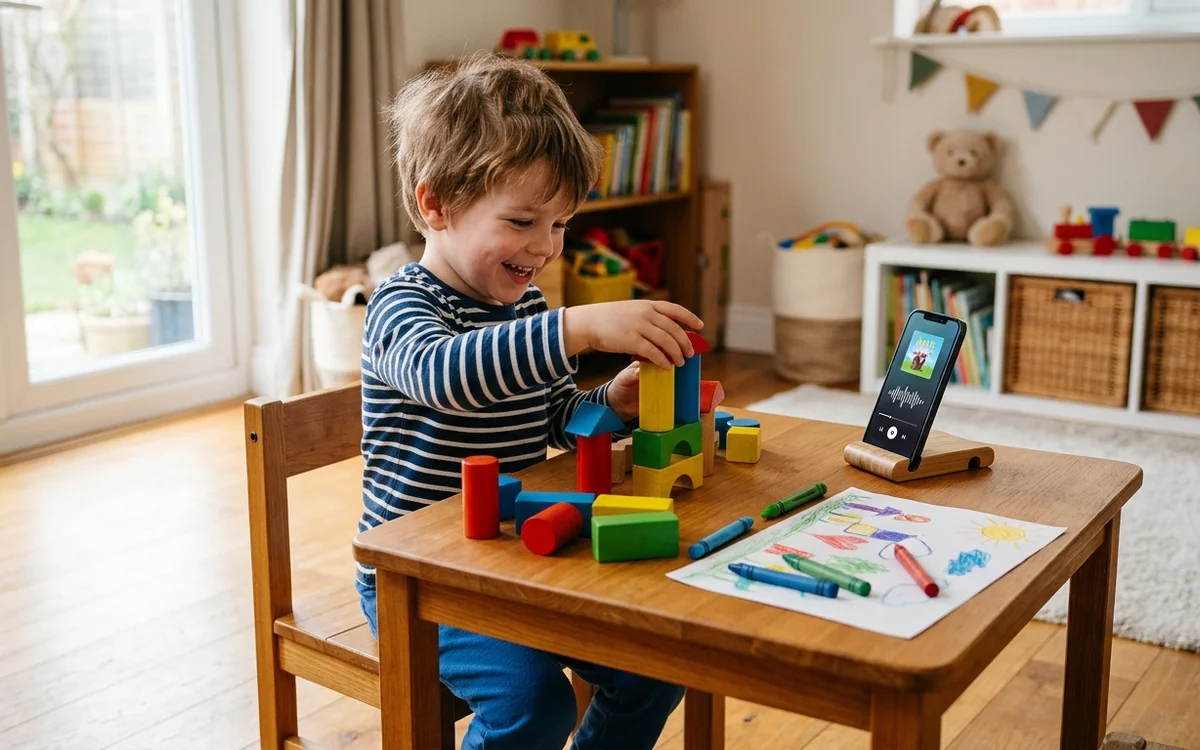
One advantage of audio-based practice is that young children do not have to watch or interact with a phone continuously. They can listen to questions while:
- Playing quietly with toys.
- Drawing or coloring.
- Riding in the car.
- Relaxing at home.
- Completing another simple activity.
Repeated listening can make the wording of questions and answers increasingly familiar. However, passive listening is only one part of learning. Children may sometimes be focused on another activity and miss what they hear.
Parents should periodically check whether children can answer the questions independently rather than assuming that listening alone means the questions are mastered.
6. Check Learning with Small Hints and Opening Words
After a child has listened to a question several times, check whether they recognize and remember it. Begin by asking the complete question and allowing the child to respond.
If the child hesitates, offer a small hint rather than immediately treating the answer as incorrect. For example, if a child is struggling to remember the answer to "How many books are in the Old Testament?" a parent might say: "Remember, the Old Testament has the bigger number." After the child answers, repeat the question without the clue.
Practice Recognizing the Beginning of a Question
As children gain confidence, parents can sometimes say only the opening words of a familiar question and see whether the child recognizes it. For example, begin: "How many books are..." Then allow the child to listen for the remaining words and recognize which question is being asked.
Because multiple JBQ questions may begin similarly, young children must also learn not to guess too early. Start with complete questions, introduce shorter clues gradually, and focus on accuracy before speed. This helps prepare children for more advanced question-recognition and buzzing practice later.
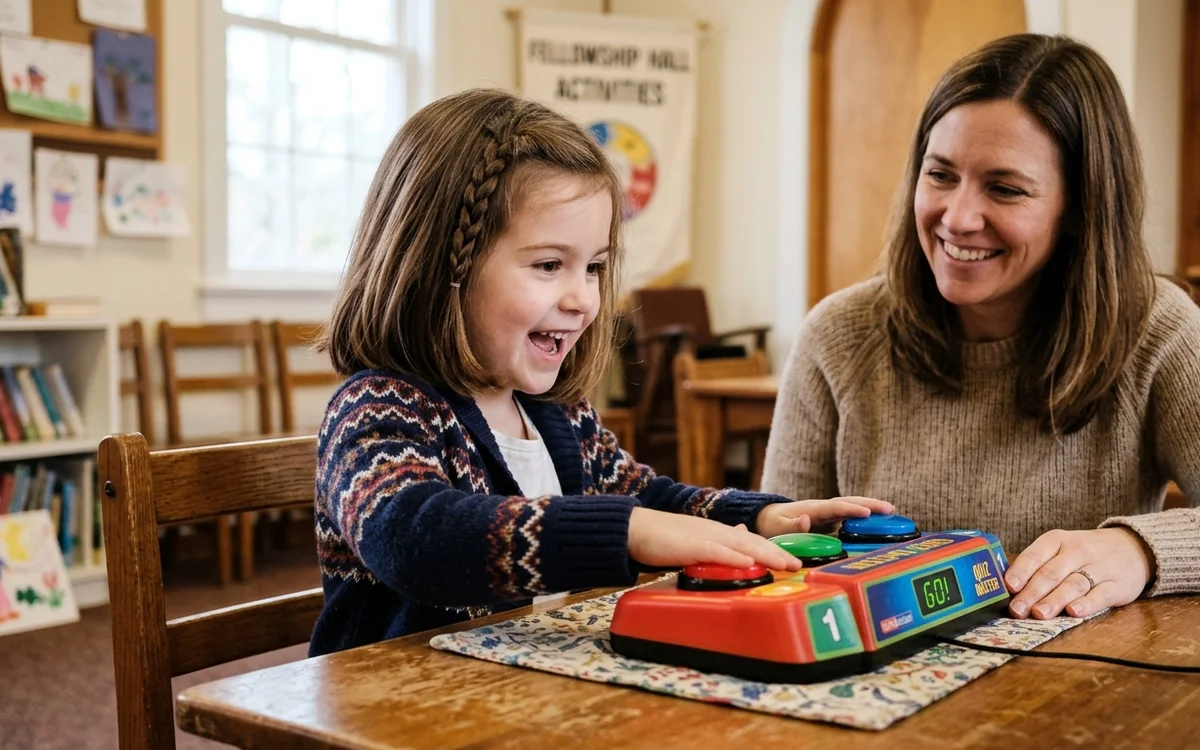
7. Introduce Buzzer Practice at an Early Age
Memorizing an answer and successfully using a quiz buzzer are two different skills. Some young children know the answer but hesitate to buzz. Others may become excited and press the buzzer without listening carefully.
Introducing basic buzzer practice at home helps children become familiar with the physical process. Individual practice buzzers can be useful because children can practice without needing a complete electronic quiz box.
Encourage the child to:
- Hold or position the buzzer comfortably.
- Find a finger position that makes pressing easier.
- Listen attentively before buzzing.
- Practice answering aloud after buzzing.
- Become comfortable repeating the process.
Some individual buzzers may require more pressure than young children expect. Short practice sessions can help them learn the movement without frustration. The goal for beginners is comfortable, controlled buzzing—not simply buzzing faster than everyone else.
8. Create a Comfortable Practice Environment
The physical setup can make a difference for younger quizzers, particularly when children are much shorter than the table. If a child sits too low, reaching the buzzer comfortably may be difficult.
Parents and coaches can use a suitable, stable seating adjustment to help children reach the table and maintain a natural hand position. Where practical, keep home practice similar to the church's quiz setup.
Familiarity with the table height, seating arrangement, and buzzer placement may help children feel more comfortable during team practice. Make sure seating adjustments are secure and do not create a risk of slipping or falling. A comfortable setup allows children to focus on listening and answering rather than struggling with the equipment.
9. Build Confidence Through Games and Encouragement
One of the biggest challenges for young quizzers is maintaining their attention. Long periods of sitting, listening, and memorizing may not work well for every child. Instead, introduce short activities that make practice enjoyable.
Turn Questions into Simple Games
Parents and coaches can use games such as passing an object, taking turns asking questions, or practicing short buzzer rounds. For example, children can pass a soft ball while reviewing questions. When the game pauses, the child holding the ball gets an opportunity to answer. Vary the activity occasionally to keep practice engaging without distracting from the questions.
Celebrate Small Improvements
Some beginners hesitate to answer because they expect an older or more experienced quizzer to respond first. Encourage these children by recognizing their efforts.
A high-five, encouraging words, or occasional small reward can help a child associate practice with positive experiences. Avoid comparing beginners with more experienced teammates. For a young quizzer, confidently answering one question may represent meaningful progress.
10. Know When to Teach and When to Practice a Match
Parents and coaches should distinguish between teaching sessions and simulated quiz matches. Both are useful, but they serve different purposes.
During Teaching Sessions
The objective is to help children learn. If a child gives an incomplete answer or becomes confused, the parent or coach can provide hints, explain the answer, and ask the child to try again. There is no need to turn every question into a strict competition.
During Practice Matches
The objective changes. Children need to become familiar with buzzing, question flow, scoring, and reread opportunities. If a question becomes available to the opposing team under the applicable reread rules, practice should generally preserve that opportunity. This is particularly important when both teams contain younger children who are eagerly waiting for their turn.
After the match, coaches can revisit missed questions individually and provide additional teaching. Teaching sessions help children learn the answers. Practice matches help children learn how to participate. Both contribute to developing a confident JBQ quizzer.
A Simple Beginner Practice Routine
Parents do not need a complicated schedule to begin teaching Junior Bible Quiz. Here is an example of a short practice session for a child who is just starting.
This is only an example. Adjust the number of new questions and the time according to the child's age, attention span, and the difficulty of the material. Some days, a child may learn several questions quickly. On other days, reviewing one challenging question may be enough. Consistency, encouragement, and patience matter more than following a perfect schedule.
Common Mistakes to Avoid
When introducing Junior Bible Quiz to young children, parents and coaches should avoid several common mistakes:
- Expecting children to read before they begin: Listening and repetition can introduce Bible knowledge before independent reading.
- Introducing too many questions at once: Begin with manageable goals.
- Assuming listening equals memorization: Occasionally check answers without audio assistance.
- Correcting every mistake harshly: Provide helpful clues and positive encouragement.
- Focusing too much on buzzing speed: Accuracy and listening should develop alongside buzzer confidence.
- Comparing children: Each quizzer learns at a different pace.
- Making every practice a competition: Preserve time for relaxed teaching and guided repetition.
Final Thoughts: Build a Love for God's Word First
Junior Bible Quiz provides children with opportunities to learn Scripture, understand foundational Bible teachings, develop confidence, and build friendships through church activities.
Children do not need to be fluent readers to begin participating in that experience. Parents and coaches can start with a few questions, read them aloud, repeat the answers, introduce simple memory clues, and use audio learning to reinforce familiar material.
As children grow, they can gradually develop stronger recall, better listening, and greater confidence with the quiz buzzer. Not every young child will progress at the same speed, and that is perfectly acceptable.
The greatest goal is not how quickly children learn to buzz, but how deeply they begin to understand, remember, and value God's Word.
About JBQ Companion
JBQ Companion is a mobile application designed to help children, parents, and coaches prepare for Junior Bible Quiz.
Its Learn module provides question study tools, audio playback, and question progress tracking. These features can help families introduce questions, reinforce answers through listening, and organize ongoing preparation.
Learn more at www.jbqcompanion.com.
This article provides practical suggestions for parents and coaches. Learning methods should be adapted to each child's needs, and simulated matches and official competitions should follow the applicable Junior Bible Quiz rules and guidelines.