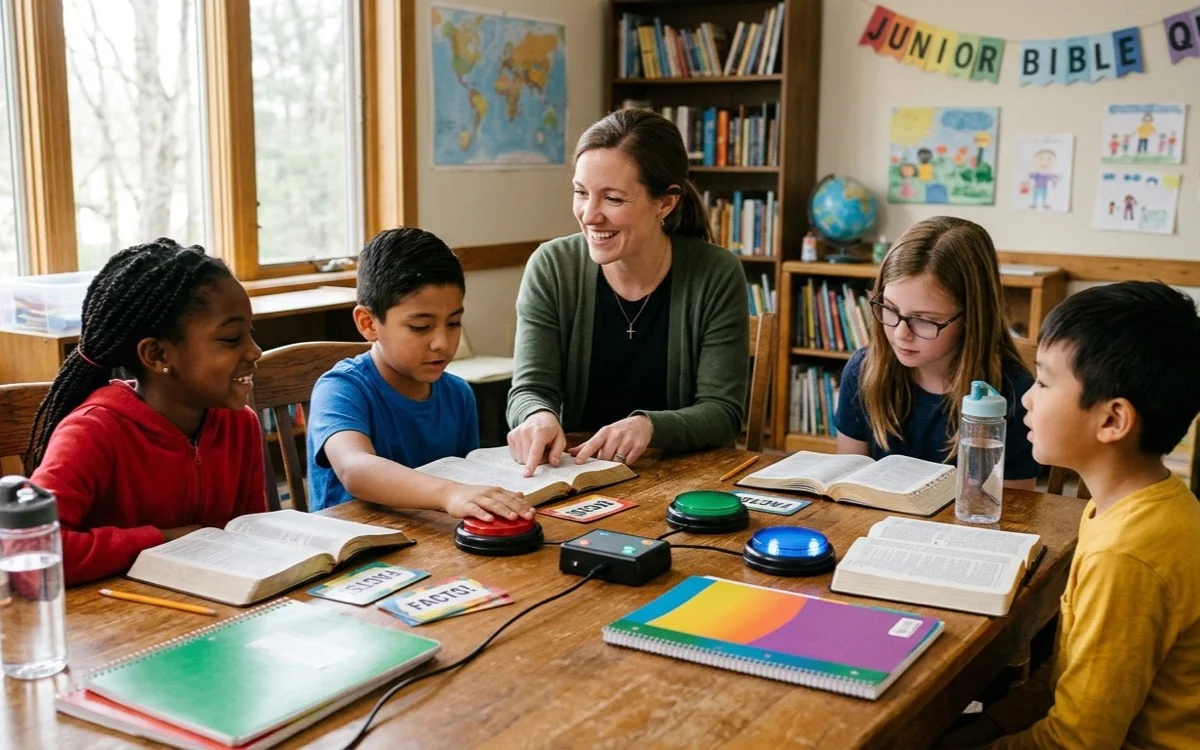
Coaching a successful Junior Bible Quiz team involves more than helping children memorize questions. A good coach also helps quizzers develop confidence, learn when to buzz, work together, and handle competition with a positive attitude.
Every JBQ team is different. Some children can answer challenging 30-point questions, while others are just beginning to learn their first 10-point questions. One of the coach's most important responsibilities is to develop a strategy that gives every child an opportunity to improve.
These ten practical strategies are based on real Junior Bible Quiz coaching and coordination experience. They can help both new and experienced coaches prepare their teams for practices and quiz meets.
1. Assign Questions Based on Each Quizzer's Ability
Not every quizzer should be expected to answer the same level of questions.
Junior Bible Quiz includes 10-, 20-, and 30-point questions, and children often develop confidence at different rates.
A practical starting strategy is:
- Newer quizzers: Focus primarily on familiar 10-point questions.
- Intermediate quizzers: Practice 10- and 20-point questions while building speed and accuracy.
- Experienced quizzers: Prepare for challenging 20- and 30-point questions.
These are coaching guidelines, not fixed rules. A newer child may be ready for some 20-point questions, while an advanced quizzer may need to review basic questions.
Before a meet, talk with the children and parents about their preparation. Then establish a clear plan for which question levels each quizzer should prioritize.
The goal is to balance team performance with opportunities for every child to participate and grow.
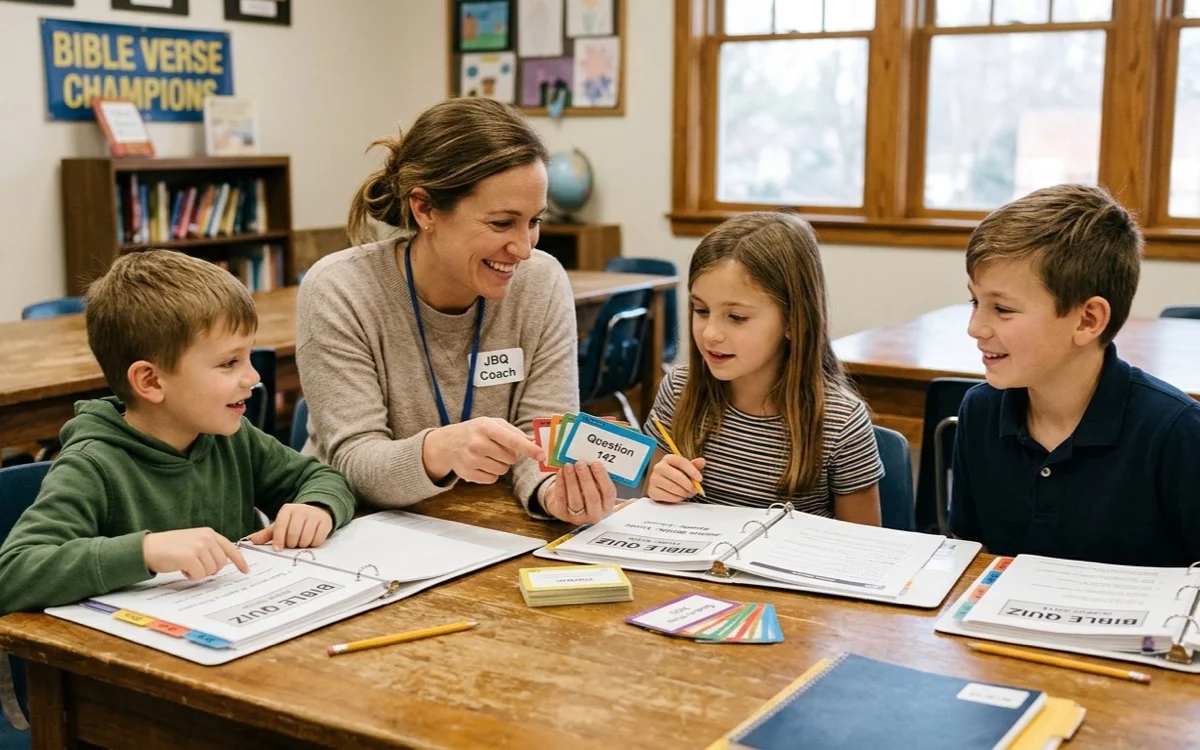
2. Give Newer Quizzers a Fair Opportunity to Answer
In some matches, an experienced quizzer may recognize a 10-point question immediately. A younger child may also know the answer but need another second to identify the question and press the buzzer.
If experienced children answer every easy question, newer quizzers can lose confidence.
During practice, try giving beginners a brief opportunity to respond before experienced teammates buzz.
For example, consider this official 10-point question:
Question: What are the four Gospels?
Answer: Matthew, Mark, Luke, John.
A newer quizzer who has studied this question should have opportunities to answer it independently.
In selected practice rounds, coaches can ask experienced quizzers to wait briefly before buzzing, giving less experienced teammates a chance to respond.
During actual matches, the coach must use judgment based on the team's agreed strategy and the competition situation.
The important lesson is that winning a few extra points should not always come at the expense of a child's long-term confidence and development.
3. Establish Clear Expectations for Reread Questions
Reread questions can create confusion if the team has not agreed on a strategy.
For example, when a question becomes available again after an opposing quizzer answers incorrectly, multiple teammates may want to buzz.
A younger quizzer may expect an opportunity, while an experienced quizzer may instinctively respond first.
One approach that has worked in practice is to alternate appropriate reread opportunities between newer quizzers.
A coach can explain the plan before the match:
- Give newer quizzers appropriate opportunities on familiar questions.
- Alternate opportunities when practical.
- Allow the coach to adjust the strategy based on the match.
- Make sure every child understands the expectations.
This is a team coaching strategy, not a universal JBQ rule.
A short explanation before the match can prevent misunderstandings, reduce frustration, and help children focus on answering questions instead of worrying about whose turn it is.
4. Practice Faster Buzzing and Reaction Time
Knowing the correct answer is only part of Junior Bible Quiz.
Children must also recognize questions quickly and learn to operate the buzzer accurately.
Some quizzers know the material well but hesitate before pressing the buzzer. Others buzz too early and struggle to complete the answer.
Regular reaction-time exercises can help children develop better coordination and timing.
Use JBQ Companion for reaction-time practice
JBQ Companion includes two useful activities:
- Fast Quizzer: The app reads a sequence of words, and the quizzer listens for a target category or item. For example, a child may be instructed to respond when they hear a color.
- Fast Buzzer: The child listens for the app's "Buzz!" prompt and reacts as quickly as possible.
These activities can make reaction-time practice more engaging.
However, buzzer speed should always be developed alongside question recognition and answer accuracy.
Fast buzzing is useful only when the child can answer correctly.
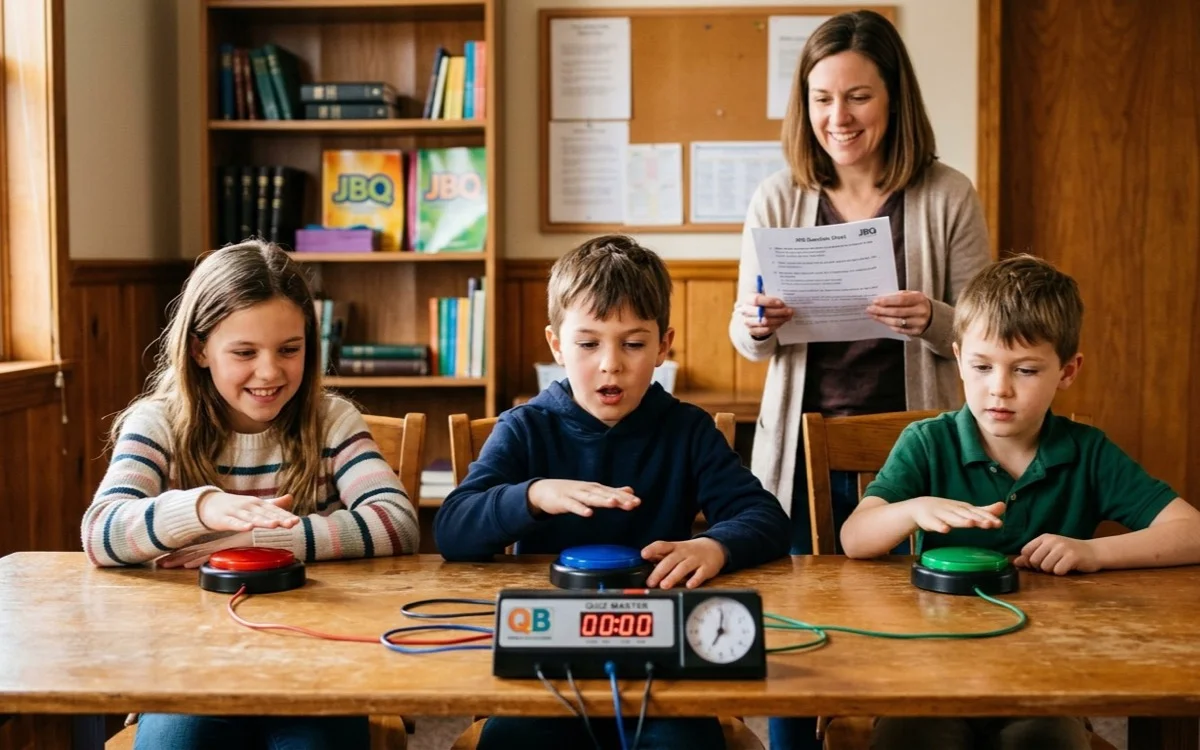
5. Teach Proper Buzzer Positioning and Control
A few small adjustments to buzzer technique can improve a quizzer's response time.
During practice, encourage quizzers to maintain a comfortable hand position close to the buzzer.
Experienced quizzers may experiment with different finger positions or controlled partial-pressure techniques, depending on the buzzer equipment being used.
The purpose is to reduce unnecessary movement, not to encourage children to press before they recognize the question.
Coaches should remember:
- Comfort and consistency are more important than unusual techniques.
- Every quizzer should learn how their buzzer responds.
- Advanced techniques should be practiced before competition.
- Children should avoid accidental activation and premature buzzing.
A newer quizzer does not need complicated buzzer techniques. Developing confidence with a normal, reliable press is usually the best starting point.
6. Teach Quizzers to Recognize Questions from Their Opening Words
Experienced quizzers often buzz before the quizmaster finishes reading a question.
This is possible because they have learned to recognize questions from their opening words.
For example, consider the official 10-point question:
Question: What are the two divisions of the Bible?
Answer: Old Testament and New Testament.
After sufficient practice, a quizzer may recognize the question from its opening phrase.
However, coaches should also teach children to listen carefully. Different questions may begin with similar words.
Use question-recognition study materials
One practical coaching method is to prepare study sheets that highlight the earliest distinctive words in each question.
For example, a coach might prepare separate materials for different levels of competition or combine appropriate 10-, 20-, and 30-point questions based on the team's needs.
During practice, read only the beginning of a question and ask the quizzer to identify the complete question and its answer.
Gradually introduce similar-sounding questions to improve accuracy.
The goal is not simply to memorize the first few words. It is to recognize the correct question reliably.

7. Adjust Your Strategy Based on the Opponent and Match Situation
Not every quiz match should be approached with the same strategy.
Some opponents buzz very quickly. Others prefer to hear most of a question before responding.
An experienced coach watches these patterns and helps the team adapt.
For example:
- Against very fast opponents, experienced quizzers may need to recognize questions earlier.
- When accuracy is more important than speed, waiting for additional question wording may be the better choice.
- If a quizzer has already made several mistakes, the coach may encourage more careful buzzing.
- When a team is competing without an opposing team in a particular round, the approach may be different because there is less pressure to buzz early.
Some competitions include situations commonly described as ghost rounds. Coaches should follow the applicable meet rules rather than assume that every district handles these rounds identically.
The best strategy is flexible. A coach should consider the score, remaining questions, quizzer confidence, and the match's rules before making adjustments.
8. Use Timeouts to Refocus the Team
Timeouts give coaches an opportunity to communicate important information during a match, when permitted under the competition rules.
However, a timeout should have a clear purpose.
Useful reasons may include:
- Reminding quizzers of their question assignments.
- Adjusting the buzzing strategy.
- Helping children refocus after several difficult questions.
- Giving a brief reminder about the next part of the match.
Keep the conversation short and specific.
Instead of saying, "You missed too many questions," a coach might say:
"Listen carefully, focus on the next question, and follow our plan."
Avoid overwhelming children with multiple instructions during a short timeout.
The number, length, and permitted uses of timeouts should always follow the official rules for the applicable competition.
9. Keep Communication Positive During the Match
Competition can be emotional for children, especially when a question is answered incorrectly or a quizzer makes an unexpected mistake.
The middle of a match is usually not the right time for lengthy corrections or criticism.
If a child misses a question, encourage them to focus on the next opportunity.
A coach can often communicate effectively with a few simple words:
- "Focus on the next question."
- "You know this material."
- "Stay calm and listen carefully."
- "Follow the team plan."
Team members should also learn not to blame or pressure one another.
When questions are assigned to particular quizzers, explain those expectations clearly before the match. If a disagreement arises, the coach should address it calmly and privately when possible.
Children perform better as teammates when they feel supported rather than judged.
10. Review Every Meet and Prepare for the Next One
A Junior Bible Quiz meet should be treated as a learning opportunity, regardless of the final score.
After the meet, take a few minutes to discuss what went well and what needs improvement.
Useful questions include:
- Which questions did the team answer confidently?
- Were there questions the children knew but failed to recognize quickly?
- Did everyone understand the question assignments?
- Were buzzer mistakes affecting performance?
- Which questions should receive additional attention before the next meet?
Review missed questions during a later practice session rather than turning the ride home into a criticism session.
Coaches can also use JBQ Companion to organize review and monitor learning progress.
Celebrate individual improvements, not just team victories. A beginner answering a question independently for the first time can be just as meaningful as an experienced quizzer answering a difficult 30-point question.
Final Thoughts: Help Every Quizzer Grow
A successful Junior Bible Quiz coach does more than prepare a team to win matches.
The coach helps children learn Scripture, develop confidence, practice self-control, and support one another.
Strong coaching involves balancing competition with encouragement, assigning questions thoughtfully, developing buzzing skills, and continually reviewing progress.
Every quizzer has something valuable to contribute. When coaches recognize individual strengths and provide appropriate opportunities, children are more likely to enjoy Junior Bible Quiz and continue growing throughout the season.
Above all, remember that the purpose of Junior Bible Quiz extends beyond competition: helping children build a lasting understanding of God's Word.
About JBQ Companion
JBQ Companion is a mobile application designed to support Junior Bible Quiz preparation.
Features such as question review, learning-progress tracking, Fast Quizzer, and Fast Buzzer can help parents, coaches, and quizzers organize their practice sessions.
Learn more at www.jbqcompanion.com.
This article shares practical coaching approaches drawn from Junior Bible Quiz experience. Question assignments, reread strategies, buzzer techniques, and other coaching suggestions are not official competition rules. Coaches should follow the current rules and instructions of their district or organizing body.