
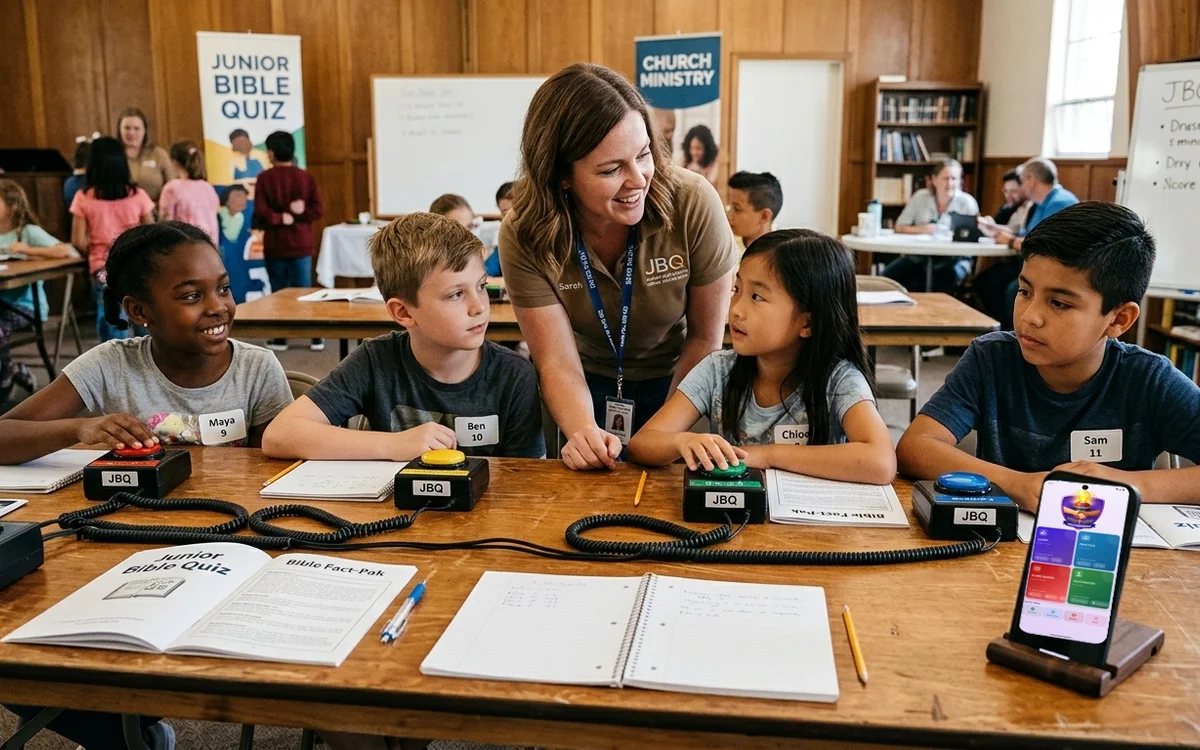
Coaching Junior Bible Quiz (JBQ) is both rewarding and challenging. Coaches want their teams to win, but they are also responsible for helping children learn God's Word, develop confidence, and enjoy participating.
During a competitive match, emotions can run high. A quizzer may buzz too early, an experienced player may make an unexpected mistake, or a team may lose several matches in a row.
Even experienced coaches can make decisions they later regret.
Recognizing common coaching mistakes can help leaders approach competition more calmly and develop better strategies.
Here are ten mistakes to watch for and practical ways to avoid them.
1. Focusing Too Much on Winning Instead of Developing Every Quizzer
Winning is exciting, and coaches naturally want their teams to perform well.
However, focusing exclusively on the final score can cause coaches to overlook individual development.
Experienced quizzers may contribute most of the team's points, while beginners struggle to find opportunities. This can happen particularly when coaches rely heavily on their strongest quizzers.
Core coaching principle: A strong JBQ ministry develops children, not just winning teams.
How to avoid it:
- During teaching sessions, create opportunities for beginners to answer questions assigned to their learning levels (see our guide on practicing with beginners and experienced quizzers together).
- Recognize improvement even when the points earned are small.
- During official competitions, make appropriate strategic decisions while remembering that every child deserves encouragement.
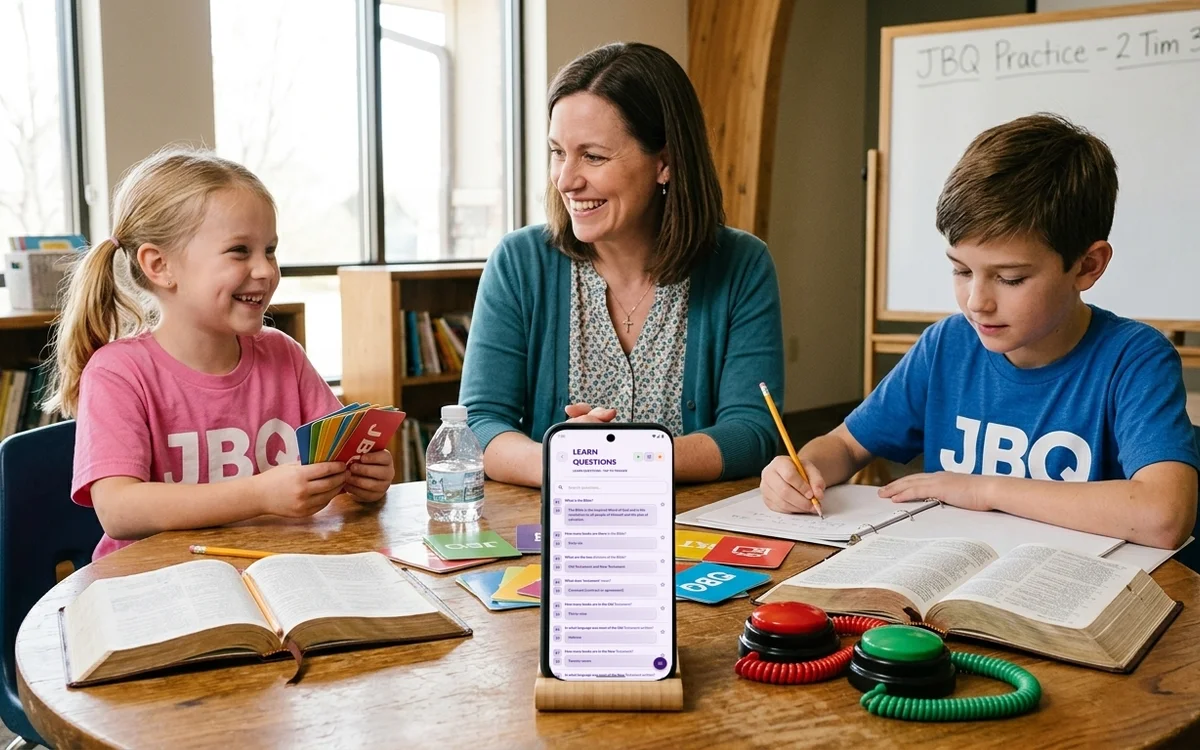
2. Showing Frustration When Children Make Mistakes
A quizzer may answer incorrectly, buzz too early, or make the same mistake several times.
During a close match, these situations can be frustrating.
However, visible anger or harsh criticism can make children more nervous and lead to additional mistakes. Young quizzers may become afraid to buzz or lose confidence.
How to avoid it:
- Remain calm and use a reassuring tone.
- Focus on what the child should do next rather than repeatedly discussing the previous mistake. For example, a simple reminder such as "Listen carefully and take your time" can be more helpful than an emotional reaction.
- Discuss complicated mistakes after the match or during an appropriate break.
3. Showing Favoritism Toward Your Own Child or Certain Quizzers
Some JBQ coaches are also parents of participating children.
This can be beneficial because parents understand the time and effort required for preparation. However, it creates a responsibility to treat every quizzer fairly.
Even unintentional favoritism can affect team morale. A coach may give their own child more answering opportunities, overlook their mistakes, or focus more heavily on their individual performance.
How to avoid it:
- Establish consistent coaching expectations for the entire team.
- Evaluate quizzers based on preparation, ability, participation, and the team's needs rather than personal relationships (explore our practical JBQ coaching strategies for structured team roles).
- Explain important coaching decisions when appropriate.
- If a decision directly affects the coach's own child and creates a difficult conflict, another responsible coach or coordinator may be able to provide an objective perspective.
Fairness must be visible in coaching decisions, not simply intended.
4. Giving Up Mentally When a Match Becomes Difficult
Sometimes a team falls far behind, and the remaining questions may not be enough to win.
A scoring application may make the mathematical situation clear. At that moment, a coach might become discouraged and stop actively guiding the team.
However, the match still matters to the children.
Individual quizzers may still have opportunities to answer questions, improve their scores, gain experience, or complete personal goals.
How to avoid it:
- Remain engaged until the final question.
- Continue encouraging children to listen, answer accurately, and use the experience productively.
- Even when the team cannot win, individual performance and confidence still matter.
The match may be out of reach, but the opportunity to help a child grow is not.
5. Mismanaging Negative Points and Timeouts
A quizzer who repeatedly buzzes too early can accumulate negative points.
Coaches need to recognize when the quizzer should slow down and when strategic intervention might help.
However, using a timeout too early can also create problems. A team may have only a limited number of timeouts available, so coaches must consider the match situation.
How to avoid it:
- Watch for patterns rather than reacting emotionally to every incorrect answer.
- If a quizzer has accumulated two incorrect interruptions or is approaching an applicable penalty threshold, consider whether a timeout would help.
- A short, calm instruction can sometimes improve performance: "Slow down. Listen for more of the question before buzzing."
- If another quizzer at the same question level is available, the coach may also discuss allowing that teammate to take more opportunities.
- Early in a match, it may be reasonable to observe a few additional questions before using a timeout. Later in a close match, intervention may be more urgent.
Always follow the applicable competition rules governing timeouts, substitutions, and negative points.
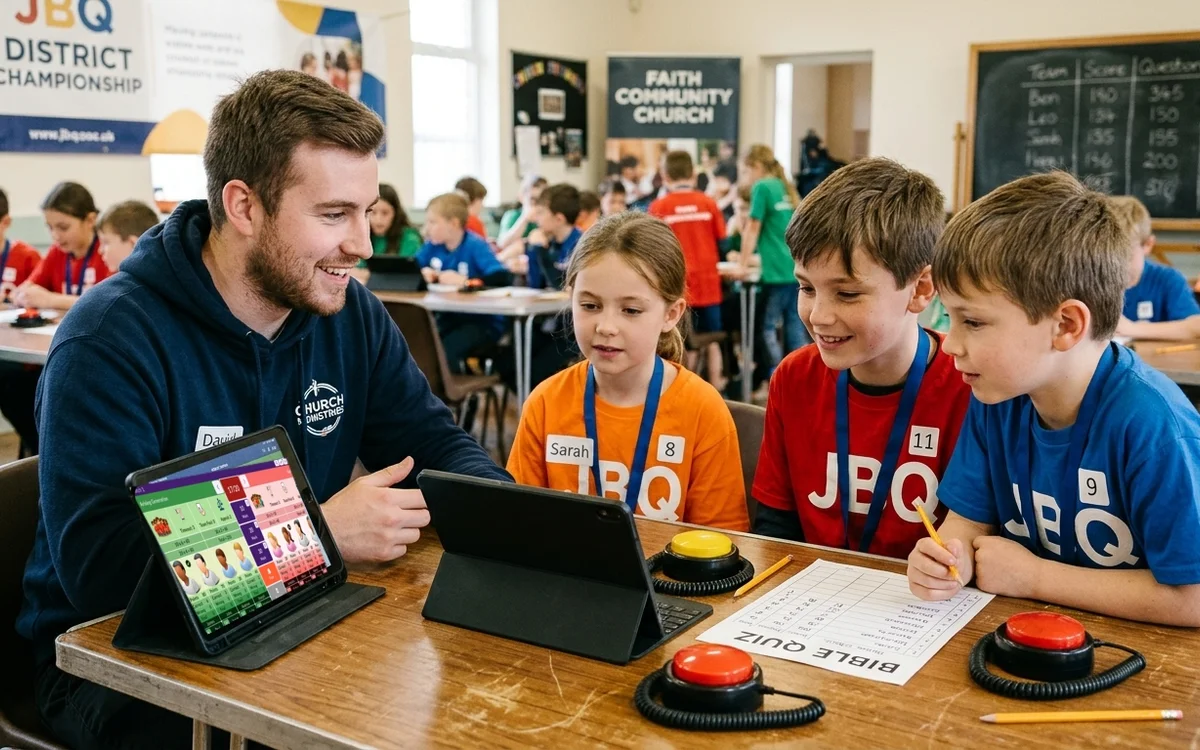
6. Failing to Manage Team Strategy During Ghost Rounds
Ghost rounds and other special match situations can create confusion when team members have different expectations.
Some quizzers may want to achieve a personal quiz-out. Others may need opportunities to participate or improve individual scores.
Without a clear plan, teammates may compete against one another for answers, leading to unnecessary negative points or tension.
How to avoid it:
- Establish the team's strategy before the round whenever possible.
- Explain whether the priority is controlled buzzing, helping a particular quizzer complete an achievable individual goal, or providing broader participation.
- If the strategy is not working, use an appropriate break to reassess.
- A substitution may sometimes help manage repeated conflicts, provided the competition rules allow it.
The important principle is that quizzers should understand the plan and remain respectful of their teammates. Individual goals are valuable, but they should not create conflict within the team.
7. Allowing Parent Pressure to Influence Match Decisions
Parents naturally want their children to succeed.
Sometimes a parent may want their child to answer more questions, pursue a quiz-out, or receive a particular opportunity. These requests can become difficult when another quizzer also has a valid goal.
A coach may feel pressured to satisfy one family even when the decision affects the entire team.
How to avoid it:
- Set expectations before competitions.
- Explain that coaching decisions consider the team's situation, individual development, fairness, and applicable rules.
- During a match, maintain the established coaching process rather than changing strategy because of outside pressure.
- When parents ask questions afterward, explain the decision calmly and briefly.
- If a concern has been reasonably addressed, it does not need to become an ongoing disagreement unless further discussion is necessary.
For more guidance, see our article on handling parent conflicts in Junior Bible Quiz.
8. Giving Too Many Instructions During a Match
Coaches may feel pressure to manage every detail of a competition.
They might repeatedly tell children to buzz faster, slow down, change strategy, or avoid mistakes. However, too many instructions can overwhelm young quizzers.
Instead of concentrating on the question, children may become distracted by the coach's expectations.
How to avoid it:
- Keep instructions brief and specific.
- Before the match, help children settle into their seats, become comfortable with the equipment, and understand the initial strategy. A simple instruction might be: "Listen carefully during the first few questions. Don't rush."
- Then allow the quizzers to concentrate.
- Use permitted coaching opportunities to communicate necessary adjustments.
Children need clear direction, not constant pressure (see our realistic practice plans for busy families for routines that build calm independence).
9. Prejudging Opponents Before the Match Begins
Coaches and quizzers sometimes recognize other teams from previous competitions. They may believe one team is extremely strong or another team is relatively inexperienced.
These assumptions can influence performance. When facing a strong opponent, children may become discouraged before the first question. Against a team they expect to beat, they may become overconfident and buzz carelessly.
Both situations can result in avoidable mistakes.
How to avoid it:
- Use previous match experience as useful information, not as a prediction of the final result.
- Encourage children to concentrate on the current question rather than the opposing team's reputation.
- If the opponent is known for fast buzzing, remind quizzers to listen accurately and adjust thoughtfully.
- If the opponent is less experienced, remind children to maintain the same discipline.
A match can change quickly because of correct answers, interruptions, and negative points. Respect every opponent, but never decide the outcome before the match begins.
10. Responding Poorly to Consecutive Losses
Losing one match can be disappointing. Losing several matches in succession can affect the entire team's confidence.
Children may begin believing they are not capable of competing successfully. Coaches can unintentionally make this worse by focusing excessively on mistakes or expressing disappointment.
How to avoid it:
- Encourage the team immediately after the match.
- Recognize specific things the quizzers did well, even when the overall result was disappointing.
- Offer one or two practical improvements instead of a long list of problems.
- Before the next match, help children reset their focus.
- Avoid promising victory or dismissing another team's abilities. Instead, remind children that every match is a new opportunity to compete carefully and confidently.
- More detailed technical feedback can be addressed during the next regular practice.
A coach's response to a loss can influence how confidently children approach their next match.
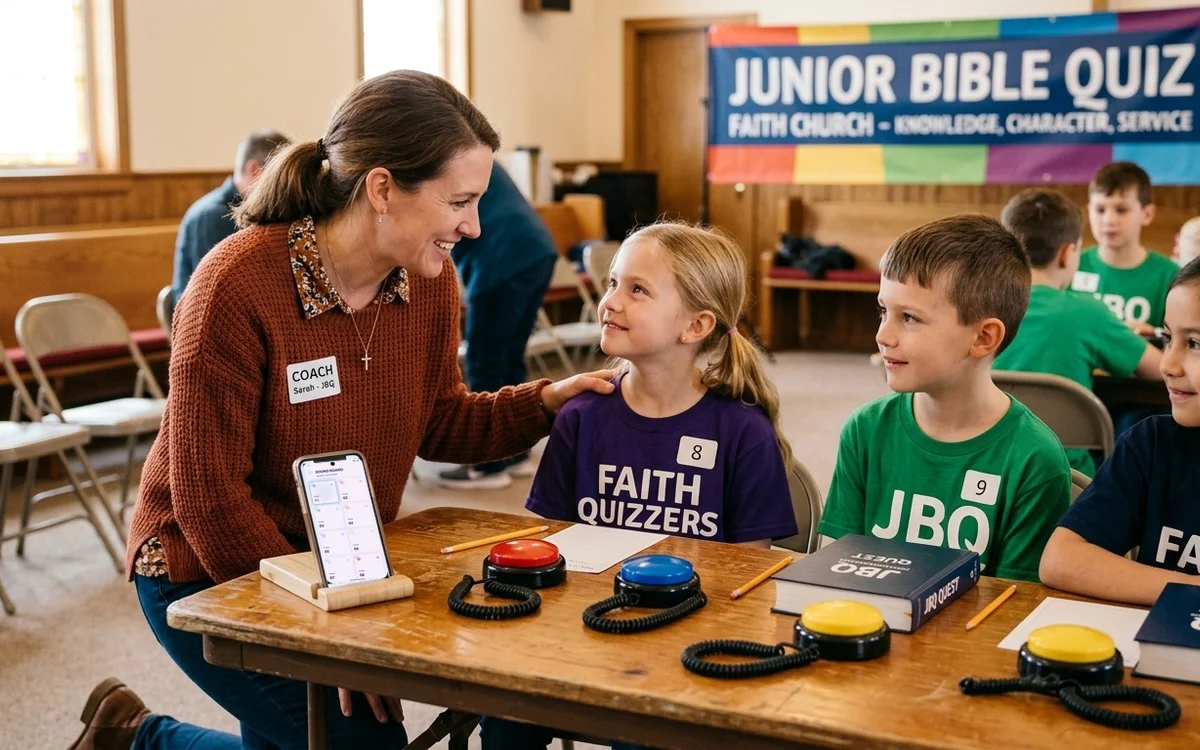
A Quick Coaching Checklist Before Every Match
A short checklist can help coaches remain focused when competition becomes stressful.
The purpose of this checklist is not to make coaching rigid. It is to help coaches remain calm, organized, and attentive to the children.
How JBQ Companion Can Support Better Coaching Decisions
The JBQ Companion Scorekeeper module can help coaches and coordinators track quiz match scoring and follow the match situation.
Having accurate scoring information available can support decisions about pacing, strategy, and individual performance.
For example, coaches can use recorded scores to review how their quizzers performed and identify areas that need attention during future practice.
However, technology should support coaching judgment, not replace it.
A score cannot fully measure a child's confidence, effort, Bible knowledge, or long-term improvement. Coaches should use available information responsibly while continuing to encourage every quizzer.
Final Thoughts
Coaching Junior Bible Quiz involves much more than memorizing questions and earning points.
Coaches help children develop discipline, confidence, teamwork, and a deeper knowledge of God's Word.
Mistakes will happen. Sometimes a coach may make the wrong strategic decision, react emotionally, or overlook an opportunity to encourage a child. The important thing is to recognize those mistakes and improve.
By staying calm, treating children fairly, making thoughtful decisions, and maintaining encouragement throughout every match, coaches can create a stronger JBQ experience for everyone.
The best measure of a coach is not simply how many matches the team wins, but how well the children are supported, challenged, and encouraged to grow.
About JBQ Companion
JBQ Companion provides tools to help parents, coaches, and coordinators with Junior Bible Quiz preparation, practice, and scoring.
The app's Learn module supports question study, while the Scorekeeper module helps manage match scoring and track performance.
Learn more at www.jbqcompanion.com.
The strategies in this article are coaching suggestions. Always follow the applicable official Junior Bible Quiz rules for match procedures, timeouts, substitutions, and scoring.