
Starting a Junior Bible Quiz ministry can be one of the most meaningful ways to help children learn God's Word while building friendships, confidence, and teamwork. But for a church that has never participated before, organizing everything can feel overwhelming.
Where do you begin? How many children do you need? Who will coach them? What equipment should you purchase? And what happens at your first quiz meet?
The good news is that you do not need to have every detail figured out before getting started.
Whether your church is launching Junior Bible Quiz for the first time or rebuilding a program that has been inactive, this practical guide will help you organize your ministry step by step.
1. Find Out Whether Children and Parents Are Interested
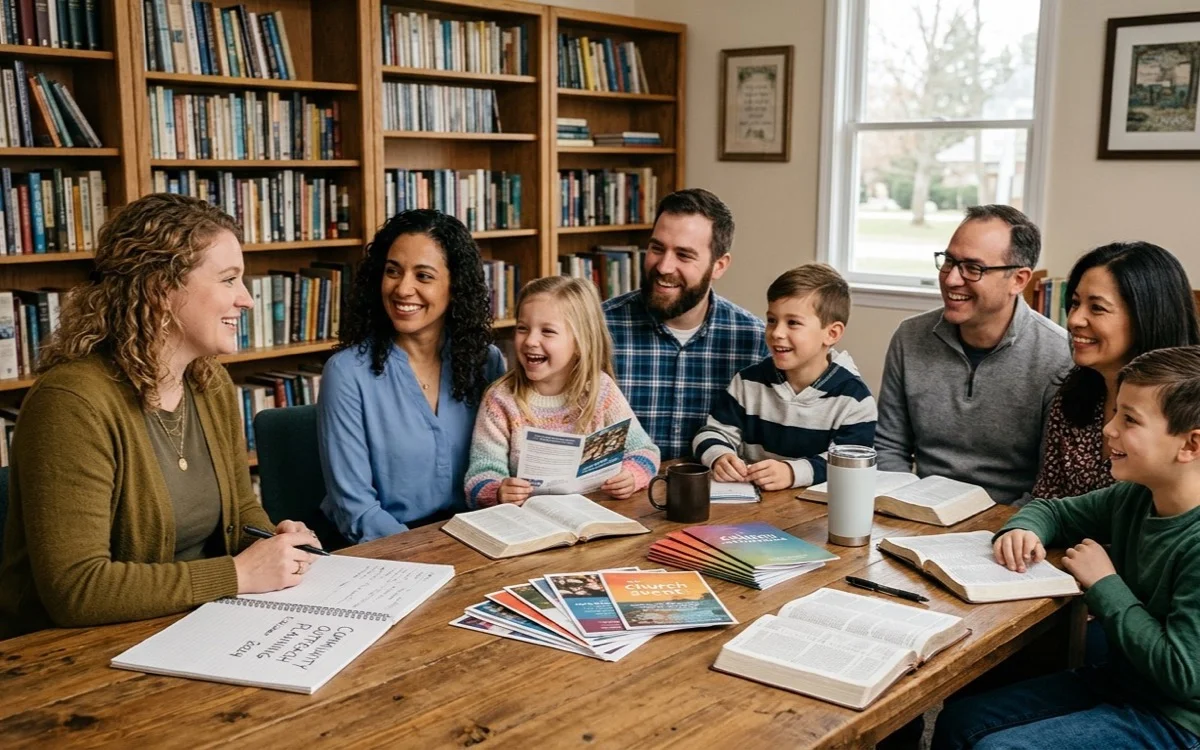
Before registering a team or purchasing equipment, start by talking with families in your church.
Junior Bible Quiz requires more than children attending an occasional Sunday class. Families may need to make time for regular practices, home study, and Saturday quiz meets.
Begin by discussing:
- How many children are interested in participating?
- Are parents willing to help their children practice at home?
- Can families attend quiz meets during the season?
- Will school activities, sports, or other commitments create scheduling conflicts?
- Can parents help with transportation or volunteering?
Explain what participating in Junior Bible Quiz involves, including the importance of practicing consistently.
A child may be excited at first but lose interest if the schedule becomes too demanding. It is better to understand family commitments early than to discover halfway through the season that several quizzers cannot attend.
Start with interested children and supportive families. A small, committed group can be a better foundation than a larger group that struggles to participate regularly.
2. Contact Your District Junior Bible Quiz Coordinator
Once you know there is sufficient interest, contact the Junior Bible Quiz coordinator for your district or area.
The coordinator can explain how the competition operates locally and what a new church needs to do to participate.
Ask about:
- Upcoming season dates and registration deadlines.
- Age eligibility and team participation requirements.
- Official question materials and current competition rules.
- Registration procedures and fees.
- Quiz meet locations and schedules.
- Volunteer requirements, including judges, quizmasters, and other officials.
- Opportunities to observe an existing quiz meet.
If you are unsure whom to contact, ask your church leadership or a nearby participating church to help you find the appropriate coordinator.
Junior Bible Quiz is often associated with Assemblies of God churches, but participation arrangements may differ by district and organizing body. Confirm the requirements that apply in your area.
Your district coordinator should be your main reference for official rules, registration, and competition procedures.
3. Gather the Study Materials and Quiz Equipment
After understanding the local requirements, begin assembling the materials your team needs.
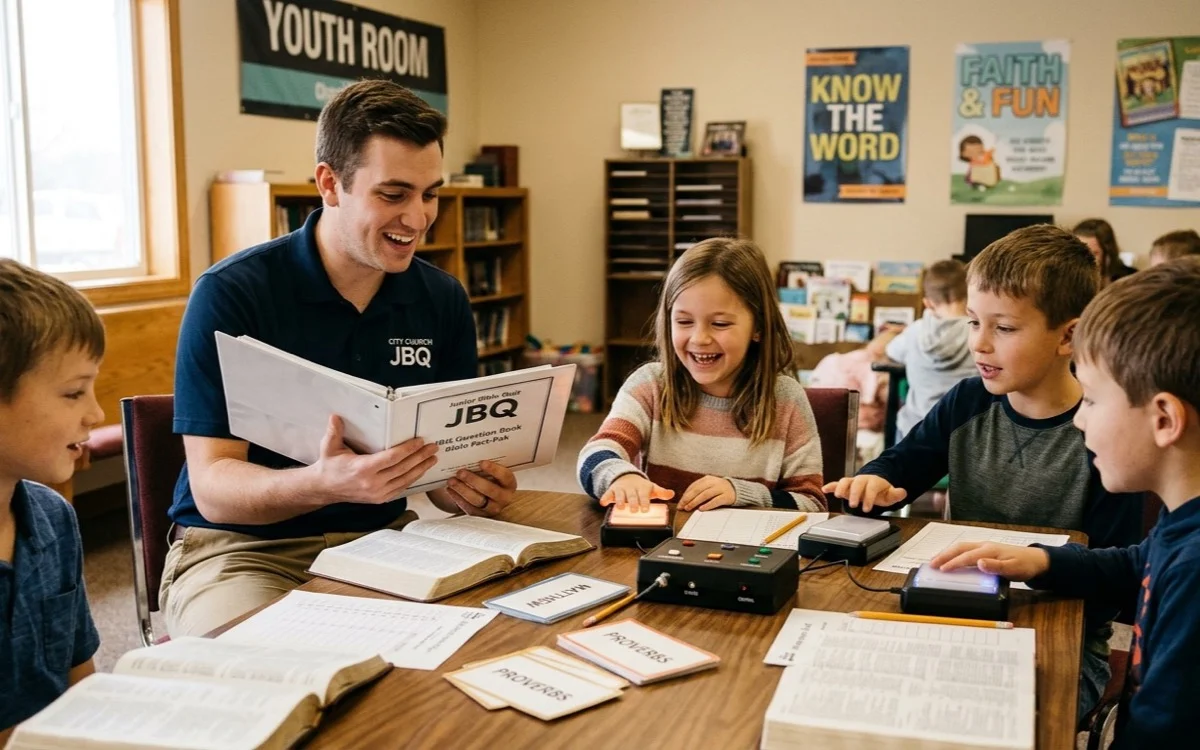
At a minimum, plan for access to the approved JBQ question set, a way for children to study at home, and an appropriate buzzer system for team practice.
Question materials
Use the official question set for your competition season.
Junior Bible Quiz commonly organizes questions by point value, including 10-, 20-, and 30-point questions. Newer quizzers may begin with shorter 10-point questions, while more experienced children gradually learn challenging questions and Scripture quotations.
For example, one official 10-point question is:
Question: How many books are there in the Bible?
Answer: 66.
Young children can begin with short questions like this before moving to longer answers.
Quiz buzzer equipment
A buzzer system helps children practice the timing and coordination involved in competitive quizzing.
If your church is just starting, ask your district coordinator or another church whether equipment can be borrowed or demonstrated before making a purchase.
You may also find it helpful for families to have a way to practice buzzer reactions at home.
Digital study tools
The JBQ Companion mobile app can support question review, read-aloud practice, learning-progress tracking, and buzzer-related exercises.
Digital tools are useful additions, but they should complement—not replace—regular coaching and parent involvement.
4. Choose a Coordinator, Coaches, and Volunteers
A Junior Bible Quiz ministry operates more smoothly when responsibilities are clearly assigned.
One person should serve as the primary coordinator, even if several adults are helping.
Ministry coordinator
The coordinator handles overall organization, communication with the district, registration, volunteer arrangements, schedules, and communication with parents.
Head coach
The head coach guides team practice and makes coaching decisions during meets. This includes helping quizzers understand question assignments and developing strategies appropriate for their abilities.
Assistant coach
An assistant coach can help with practices, review sessions, attendance, and supporting individual children.
Meet volunteers
Depending on local requirements, churches may also need to provide people to serve as quizmasters, judges, scorekeepers, timekeepers, or other officials.
In our local experience, teams have been asked to provide officials as part of participation. However, the exact number and roles should always be confirmed with the district coordinator.
Some experienced volunteers from nearby churches may be willing to explain the procedures to your new team.
Do not wait until the first meet to identify your volunteers. Assign responsibilities early and identify backups in case someone becomes unavailable.
5. Create a Practice Schedule That Works for Families
One of the biggest challenges when starting Junior Bible Quiz is finding a consistent time for practice.
Some churches practice during Sunday children's ministry. Others meet before or after the main service, on a weekday evening, or occasionally at a family home.
There is no single schedule that works for every church.
Before selecting a time, consider school schedules, parents' work commitments, transportation, and other church activities.
A practical schedule might include:
- One regular group practice each week.
- Short home review sessions on several days.
- Occasional buzzer practice or mock quiz matches.
- Extra review before an upcoming meet when needed.
Parents can take turns helping children practice, while coaches provide structure and track what the group is learning.
For young children who cannot read confidently, parents can read questions aloud and have children repeat the answers. Audio-assisted learning is another useful option.
The key is consistency. A schedule that families can follow regularly is more valuable than an ambitious schedule that becomes difficult to maintain.
6. Register Teams and Understand the Costs
Once you have interested children, assigned coaches, and a workable schedule, prepare for official team registration.
Ask your district coordinator for the current registration system and instructions.
Depending on the local process, registration may require:
- Church and team details.
- Names of participating quizzers.
- Head coach and assistant coach information.
- Required officials or volunteers.
- Registration fees and payment information.
A church may register more than one team when there are enough children, volunteers, and resources to support them.
Do not assume the same roster limits, fees, or staffing requirements apply everywhere. These should be confirmed for the current season.
Plan for additional expenses
Registration is not the only possible cost.
Your ministry may also need a budget for study materials, buzzers, transportation, team shirts, meals, or other meet-day expenses.
Discuss likely costs with parents and church leadership early so families understand the financial commitment.
If your church has a limited budget, prioritize the essentials first. Optional items can be added later.
7. Build Team Identity and Keep Parents Informed
Children often enjoy being part of a team with a shared identity.
Consider choosing a simple team name or arranging matching T-shirts. These are optional, but they can help children feel included and recognize their teammates at competitions.
Just as important is having a reliable way to communicate with parents.
A WhatsApp group, email list, or another church-approved communication channel can help the coordinator share:
- Weekly practice times.
- Study goals and assigned questions.
- Upcoming meet dates.
- Transportation arrangements.
- Lunch orders and payment instructions.
- Last-minute schedule changes.
Keep messages short, clear, and organized.
A single point of contact for important arrangements, such as lunch orders, reduces confusion and helps prevent missed information.
Remember that the ministry should be welcoming to families who may not be able to volunteer every week. Give parents different ways to contribute according to their availability.
8. Organize Transportation, Lunch, and Meet-Day Details
Your first quiz meet involves more than arriving with a team of prepared children.
Transportation, meals, volunteers, and the meet schedule all require attention.
Transportation
Before meet day, confirm how every child will get to the location and return home.
Depending on church policies and family arrangements, transportation may involve parents driving, approved carpools, or a church vehicle.
Follow your church's child-safety and transportation procedures.
Lunch arrangements
Some quiz meets offer advance lunch orders, meal tickets, or vouchers.
Where this applies, consider having one coordinator collect the number of meals required and communicate the final order to the host church or meet organizer.
Confirm the available payment options, deadline, and process for distributing any vouchers.
Send one clear reminder
A few days before the meet, send parents a concise message including the confirmed date, venue address, arrival time, expected schedule, transportation plan, lunch instructions, and coordinator contact information.
This small step can prevent considerable confusion on meet day.
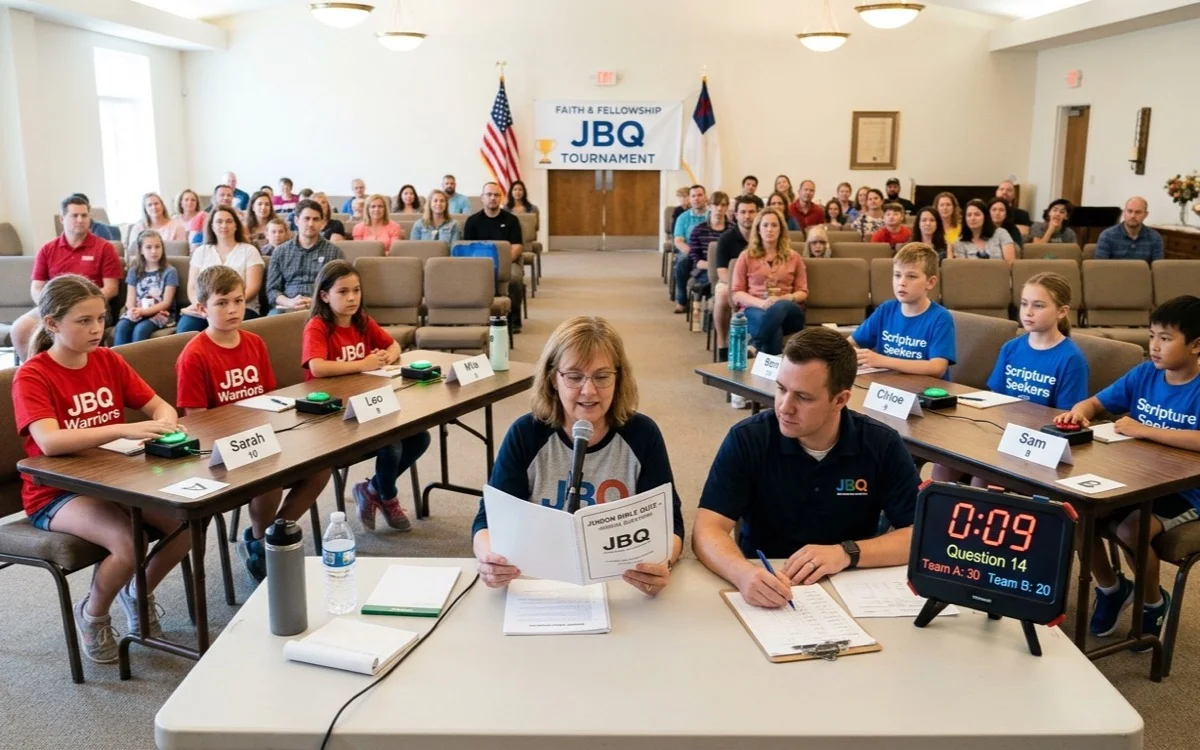
9. Know What to Expect at Your First Quiz Meet
For a new church, the first quiz meet can feel unfamiliar.
Arrive early enough to find the correct rooms, complete check-in, and help everyone settle in before competition begins.
A coordinator's responsibilities may include:
- Checking in with the host or district coordinator.
- Confirming where each team is assigned to compete.
- Checking that the coaches and quizzers have arrived.
- Making sure required officials are present and know their assignments.
- Confirming access to the buzzer equipment being used.
- Distributing lunch information when necessary.
- Staying available to communicate with parents and volunteers.
The head coach should focus on the team during competition, while the overall coordinator manages logistical questions and unexpected problems.
If a volunteer cannot attend, notify the district coordinator as early as possible rather than waiting until the meet begins.
Keep the children's first experience positive
New quizzers may feel nervous when they see experienced teams buzzing quickly.
Remind them that their first meet is an opportunity to learn how competition works.
Praise their preparation, effort, and willingness to participate.
Even if the team does not win a match, completing that first meet is an important achievement for a new ministry.
10. Follow Up After the Meet and Prepare for the Next One
The coordinator's work does not end when the final question is answered.
Before leaving, confirm that every child has an approved ride home and that all borrowed or church-owned equipment has been collected.
Afterward, communicate with parents and volunteers, thank them for their help, and share information about the next practice.
Coaches can review which questions were missed, how well the children followed the match strategy, and what needs improvement.
Avoid making the first meeting after a competition only about mistakes. Recognize the progress children made and identify a few practical goals for the next meet.
Some churches also enjoy giving children an opportunity to share their Junior Bible Quiz experience during a church service. Church leaders may recognize the team, offer encouragement, or pray with the children.
These traditions are optional, but they can help the wider congregation feel connected to the ministry.
Over time, the most sustainable Junior Bible Quiz programs are those supported by children, parents, volunteers, coaches, and church leadership working together.
Common Mistakes New Junior Bible Quiz Ministries Should Avoid
Even well-organized churches can run into difficulties during their first season.
Several challenges are worth planning for early:
- Overloading children: Start with realistic learning goals instead of pressuring every child to memorize the same number of questions.
- Underestimating family commitments: Explain the time required for practices and weekend meets before registration.
- Unclear coaching responsibilities: Make sure everyone knows who makes team decisions and who handles logistics.
- Leaving volunteer arrangements too late: Confirm officials and backup volunteers before each meet.
- Forgetting transportation or lunch arrangements: Assign someone to coordinate these details rather than assuming parents will organize them independently.
- Focusing only on winning: Celebrate improvement, participation, and knowledge of God's Word alongside competition results.
A successful ministry develops gradually. Each practice and meet gives your church another opportunity to improve how the program operates.
Final Thoughts: Start Small and Build a Strong Ministry
You do not need a large group of experienced quizzers to begin Junior Bible Quiz.
Start by finding interested families, connecting with your district coordinator, gathering the right materials, and establishing a manageable practice schedule.
Build a supportive team of coaches and volunteers, communicate clearly with parents, and treat the first season as a learning experience for everyone.
Most importantly, remember the purpose behind the ministry.
Junior Bible Quiz is not simply about teaching children to answer questions quickly. It is about helping them understand God's Word, grow in confidence, and build a foundation of faith that lasts beyond the competition season.
About JBQ Companion
JBQ Companion is a mobile application designed to help parents, coaches, and children prepare for Junior Bible Quiz.
Features such as question review, read-aloud practice, learning-progress tracking, and buzzer exercises can support both new and established JBQ teams.
Learn more at www.jbqcompanion.com.
This article provides practical ministry organization guidance based on Junior Bible Quiz experience. Registration procedures, age requirements, team limits, fees, volunteer responsibilities, and competition rules may vary by district and season. Always confirm current requirements with your appropriate Junior Bible Quiz coordinator and follow your church's child-safety policies.