
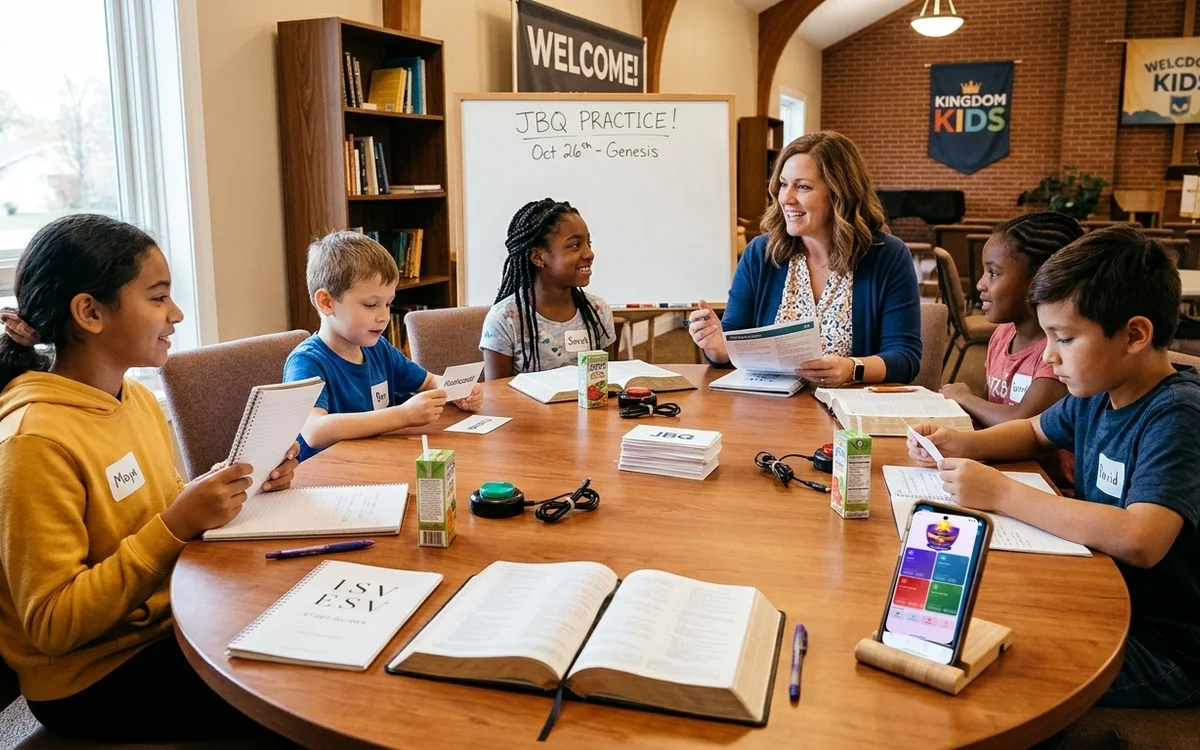
One of the biggest challenges in Junior Bible Quiz (JBQ) is coaching a team with children at different experience levels.
Some quizzers have participated for several years. They know hundreds of questions, recognize answers quickly, and are confident with the buzzer. Others may be participating for the first time and are still learning their first set of questions.
When these children practice together, experienced quizzers naturally tend to dominate. They buzz faster and answer more questions, leaving beginners with very few opportunities.
As coaches, we want our teams to win. But we also have a responsibility to help every child learn God's Word, develop confidence, and enjoy participating.
Here are ten practical strategies to help balance beginners and experienced quizzers during JBQ practice.
1. Assign Question Levels Based on Experience
One useful approach is assigning different question levels to quizzers based on their knowledge and experience.
For example:
- 10-point questions: Beginners and younger quizzers.
- 20-point questions: Intermediate quizzers who have learned more questions.
- 30-point questions: Experienced quizzers who are ready for more challenging questions.
This gives every quizzer a specific responsibility. Instead of expecting beginners to compete directly with experienced quizzers for every question, create opportunities for them to concentrate on questions they know.
A beginner might know only the 10-point questions, but that knowledge is still valuable to the team.
The goal is not to separate children by ability permanently. It is to give them a starting point where they can succeed. As their knowledge improves, they can gradually move to higher question levels (see our guide on practical JBQ coaching strategies for more on role assignments).
2. Establish Strict Rules During Practice
Assigning question levels alone may not solve the problem.
Experienced quizzers sometimes buzz on easier questions even when those questions have been assigned to beginners. They may know the answers immediately, and buzzing becomes almost automatic.
However, when this happens repeatedly, beginners lose opportunities to participate.
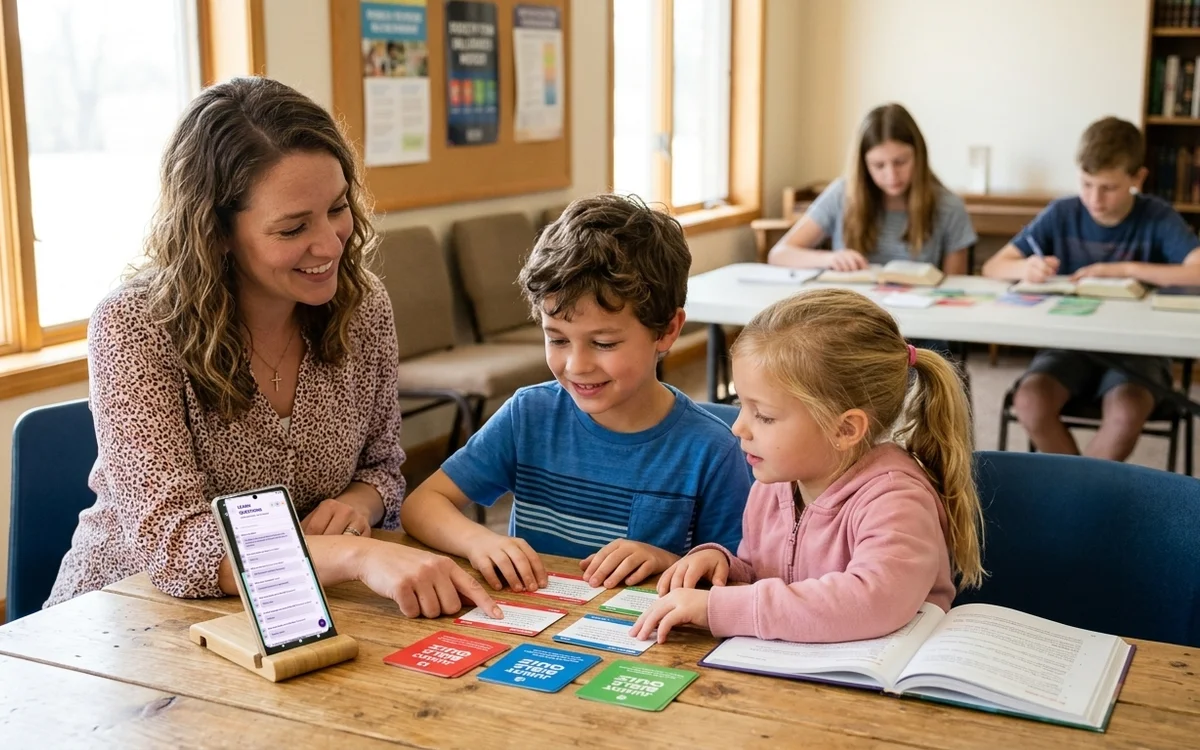
One coaching approach is to establish a strict rule during designated teaching sessions.
Example practice rule: A quizzer may answer only questions assigned to their designated point level.
Suppose a 10-point question is assigned to beginners. If a quizzer assigned to 30-point questions buzzes, the coach stops that quizzer from answering and records a practice penalty.
Some teams use a 30-point deduction for this violation, treating it as an incorrect response in their practice scorekeeping. Even if the experienced quizzer knows the correct answer, the coach does not allow them to continue.
This helps children understand that answering every question is not always the objective. Sometimes, being a good teammate means allowing someone else the opportunity to answer.
Important: This is an example of a church-specific training rule, not an official JBQ competition rule. Practice-only penalties and question restrictions should not be applied in official matches.
3. Apply the Same Rule to Reread Questions
Another important consideration is how to handle reread questions.
Suppose Team A receives a 10-point question. A quizzer assigned to 30-point questions buzzes. Under the team's designated practice rule, that quizzer receives the penalty and cannot answer.
When the question is subsequently offered to Team B as a reread during the training exercise, the same restriction applies. Only Team B's designated 10-point quizzers may attempt it.
If a 20-point or 30-point quizzer from Team B buzzes, the coach applies the same practice penalty.
This consistency matters. Otherwise, children may try to take advantage of situations where the question moves to another team.
The practice rule should apply equally to everyone, regardless of the team or situation. This establishes discipline and avoids confusion.
4. Rotate Opportunities Between Beginners
Sometimes a team has two beginners who are both assigned to 10-point questions.
Even among beginners, one child may be faster with the buzzer. Without guidance, the faster beginner may answer most questions while the other continues to struggle.
During teaching sessions, rotate opportunities between the two beginners. For example, one beginner gets the first opportunity, and the other gets the next.
This ensures both children receive meaningful practice. It also helps coaches identify areas where each child needs improvement.
One beginner might know the answer but struggle with buzzer speed. Another may buzz quickly but need more practice recalling the complete answer. By rotating opportunities, coaches can help both children develop (if you have quizzers who cannot yet read fluently, see our recommendations for teaching young children who cannot read yet).
As the competition season approaches, gradually introduce more realistic buzzer competition.
5. Don't Let Experienced Quizzers Dominate Every Practice
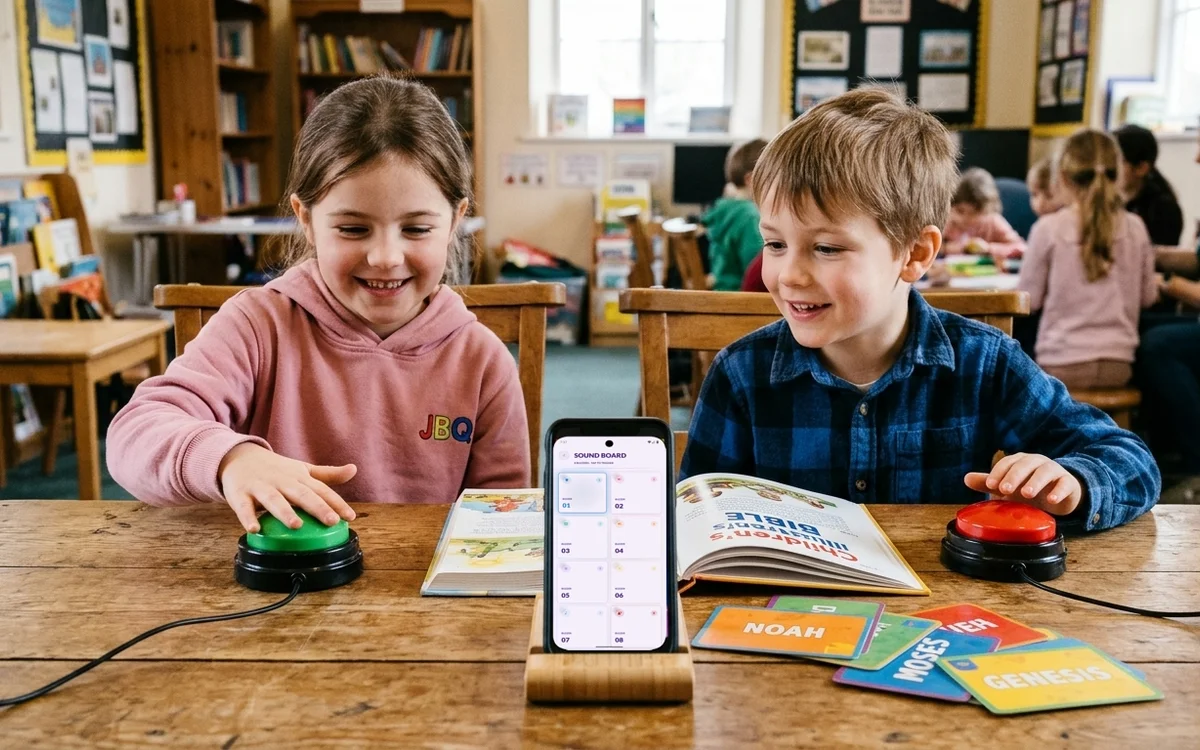
Experienced quizzers are an important part of the team. Their knowledge and speed can make a significant difference during competitions.
However, allowing them to dominate every practice can create problems. Beginners may start thinking: Why should I study if someone else is always going to answer? Eventually, they may lose interest.
This is particularly concerning because Junior Bible Quiz should be about more than winning individual matches. The goal is to build lasting knowledge of Scripture.
Experienced quizzers should understand that helping beginners improve is also part of being a strong team member. During teaching sessions, encourage them to concentrate on their assigned questions and allow beginners to build confidence.
Later, during competitive practice, everyone can participate according to the applicable official rules. A successful team needs both strong experienced quizzers and confident beginners.
6. Start Teaching Early, Before Competition Season
Preparation becomes easier when children begin learning new questions well before the first competition.
Whenever possible, consider introducing new questions during the summer holidays. Children may have fewer school-related responsibilities during that period. This creates an opportunity to concentrate on memorization and build a strong foundation.
Once school begins, balancing homework, activities, church commitments, and JBQ practice can become challenging (see our suggestions on realistic JBQ practice plans for busy families).
If children have already learned many questions during summer, they can spend more time reviewing and improving their speed during the school year.
Of course, every church has a different schedule. Some churches may not be able to begin during the summer. The important principle is to start early enough that beginners have time to develop confidence before their first competition.
7. Gradually Transition From Teaching Practice to Match Practice
A useful approach is to begin preparing approximately three months before competitions. However, every practice does not need to follow official match procedures from the beginning.
New quizzers need time to understand the questions, the buzzer system, and the expectations. Gradually increase the level of competition as the team improves.
Month 1: Learning and Confidence
During the initial stage, focus on helping children become comfortable.
Concentrate on memorizing questions, understanding answers, and practicing with the buzzer. Use assigned question levels and rotate opportunities between beginners. Experienced quizzers should respect these assignments.
The goal is to make sure every child participates and develops a solid foundation.
Month 2: Improving Speed and Team Coordination
As children become more comfortable, introduce more competitive practice.
Continue reviewing questions while helping children improve recall speed. Begin focusing on team coordination. Children learn when to buzz, when to wait, and how to avoid unnecessary mistakes.
Assigned-question restrictions can still be used during selected teaching rounds, alongside more realistic match situations.
Month 3: Preparing for Official Competition
As the first competition approaches, practices should become more closely aligned with actual JBQ matches.
Use official scoring and competition procedures. Quizzers practice responding under realistic match conditions. Focus on buzzer timing, accuracy, teamwork, and avoiding unnecessary penalties.
At this stage, beginners should have enough confidence to participate without depending entirely on protected opportunities.
The objective is to help children move from learning the questions to competing with confidence. This three-month structure is an example, not a required schedule for every church.
8. Use JBQ Companion to Track Practice Performance
Keeping track of performance can help coaches identify problems that are not obvious during practice.
The JBQ Companion Scorekeeper module helps leaders manage match scoring and monitor quizzer performance.
During designated teaching practices, coaches may choose to record assigned-question violations as incorrect responses as part of their own coaching method. This reinforces the importance of following practice expectations.
Scorekeeping also helps coaches observe how children are progressing. For example, coaches can identify whether beginners are participating more often, whether experienced quizzers are making unnecessary mistakes, and whether the team is becoming more consistent.
However, scores should never become the only measure of success. A beginner who answers two questions correctly today after struggling for several weeks has made meaningful progress. That improvement deserves recognition.

9. Remember That Beginners Need Encouragement
It is easy to focus on the strongest quizzers, especially when competitions are approaching.
Experienced quizzers may contribute more points, and coaches naturally want the team to perform well. But beginners also need attention. A child who rarely gets an opportunity to answer may eventually lose interest.
Recognize effort, improvement, and participation—not just high scores. Sometimes, answering one 10-point question correctly can be a major achievement for a beginner.
Encouragement helps children continue studying and participating. Over time, today's beginners may become tomorrow's strongest quizzers.
10. Balance Winning With Long-Term Development
Every coach wants the team to win. There is nothing wrong with preparing children to compete seriously.
However, winning should not come at the expense of helping every child grow.
During official competitions, coaches must make strategic decisions based on the match situation and applicable rules. During practice, there is more flexibility.
Coaches can establish special training rules, rotate opportunities, and give beginners additional attention. The key is understanding the difference between these two environments.
Practice is where every quizzer develops. Competition is where the team applies what it has learned. When coaches maintain that balance, they build stronger teams and create a better experience for everyone.
Final Thoughts
Coaching Junior Bible Quiz teams with mixed experience levels requires patience, planning, and consistency.
Experienced quizzers need challenging questions and opportunities to improve. Beginners need encouragement, repetition, and meaningful chances to answer.
A practical approach is to assign question levels during early practices, enforce those assignments consistently, rotate opportunities between beginners, and gradually transition to official match conditions as competitions approach.
Every church may have a different coaching style, and these strategies may not work exactly the same way for every team. What matters most is creating an environment where children continue learning God's Word, developing confidence, and enjoying Junior Bible Quiz.
A strong JBQ team is not built by focusing only on the fastest quizzer. It is built by helping every child become better than they were yesterday.
About JBQ Companion
JBQ Companion is a mobile application designed to support Junior Bible Quiz learning, practice, and match scoring.
Its Learn module helps families organize question preparation, while its Scorekeeper module supports scoring and monitoring performance during quiz matches.
Learn more at www.jbqcompanion.com.
The coaching strategies in this article are suggestions for training. Any practice-specific question restrictions or penalties are not official JBQ competition rules. Always follow the applicable official Junior Bible Quiz rules during competitions.